

The Mortgage Broker
Understanding how to work effectively with the mortgage broker is one of the most consequential financial decisions a homebuyer or property owner can make. A mortgage broker is a licensed intermediary who acts on your behalf to source, negotiate, and structure financing through a network of lenders - rather than being tied to a single bank's product shelf. At dominionlendingniagara.ca, the Wilson Mortgage Team serves homebuyers, investors, and business owners across Niagara Region and Southern Ontario, including Welland, Thorold, and surrounding communities, with access to 90+ lending partners and 65+ years of combined mortgage expertise. This guide walks you through each phase of the process so you can engage confidently and secure optimal financing terms.
Step 1: Assess Your Financial Profile Before the First Conversation
Before contacting the mortgage broker, compile a clear picture of your financial standing. This means gathering your most recent T4 slips or Notice of Assessment (NOA), two to three months of bank statements, a current credit report (available free through Equifax or TransUnion), and documentation of any existing liabilities such as car loans, lines of credit, or credit card balances. Lenders evaluate four primary variables: gross income, total debt service (TDS) ratio, credit score, and down payment size. Understanding where you stand in each category before your consultation allows the broker to match you to the most suitable lender tier immediately.
Your credit score carries significant weight in determining your lender options. Scores above 680 typically qualify for prime "A" lender rates, while scores between 550 and 679 may route you toward "B" lenders or alternative lending channels. Scores below 550 generally require private mortgage solutions. Knowing your score in advance prevents surprises and allows the broker to set accurate expectations from the outset. If your profile is complex - for example, if you are self-employed or new to Canada - prepare at least 24 months of business financials or foreign credit documentation where available.
Step 2: Request a Pre-Qualification and Rate Hold
Once your documentation is organized, schedule a pre-qualification consultation with the mortgage broker. During this session, the broker will calculate your maximum purchase price using both the Gross Debt Service (GDS) ratio - which limits housing costs to approximately 39% of gross income - and the Total Debt Service (TDS) ratio, which caps all debt obligations at roughly 44% of gross income under standard OSFI guidelines. The broker will also apply the federal mortgage stress test, which requires qualification at either the Bank of Canada qualifying rate or your contract rate plus 2%, whichever is higher, ensuring you can service the mortgage under elevated rate conditions.
A rate hold, typically ranging from 90 to 120 days depending on the lender, locks in a competitive rate while you finalize your property purchase. This is not a commitment to borrow but a protective mechanism against rate increases during your search period. The Wilson Mortgage Team will submit your pre-qualification to the most appropriate lender among their network, minimizing hard credit inquiries by shopping on your behalf through a single broker inquiry rather than multiple direct lender applications - a process that protects your credit score.
Step 3: Compare Lender Tiers and Mortgage Products Systematically
The mortgage broker's core value lies in presenting structured, side-by-side comparisons across lender categories. The following table outlines the primary lending tiers available through a full-service brokerage like the Wilson Mortgage Team:
| Lender Tier | Typical Credit Score Range | Best For | Rate Environment |
|---|---|---|---|
| A Lenders (Banks, Credit Unions) | 680 and above | Salaried employees, strong credit history | Lowest available rates |
| B Lenders (Alternative Lenders) | 550 to 679 | Self-employed, recent credit events, higher TDS | Moderately higher than A lenders |
| Private Lenders | Below 550 or no score | Short-term bridge financing, credit rebuilding | Higher rates, shorter terms |
| Commercial Lenders | Varies by asset type | Investment properties, commercial real estate | Asset and income dependent |
Beyond rate, evaluate mortgage product features including prepayment privileges (typically 10-20% lump sum annually), portability options, conversion rights from variable to fixed, and penalty calculation methodology. A lower rate with a high prepayment penalty can cost more over the mortgage term than a slightly higher rate with flexible terms. The broker will quantify these trade-offs in dollar terms so your decision is grounded in total cost of borrowing, not rate alone.
Step 4: Complete the Formal Application and Manage Conditions to Funding
Once you select a lender and product, the broker submits your formal mortgage application along with the full documentation package. The lender will issue a commitment letter - a conditional approval specifying the approved amount, rate, term, and any outstanding conditions. Common conditions include a satisfactory property appraisal, proof of home insurance, confirmation of down payment source (gift letters if applicable), and updated employment verification. Each condition must be satisfied within the lender's specified timeline, typically 5 to 10 business days, to prevent commitment expiry.
The Wilson Mortgage Team coordinates directly with your real estate lawyer, lender, and insurer throughout this phase to ensure no documentation gaps delay funding. Once all conditions are satisfied, the lender issues final instructions to your lawyer, who completes the title transfer and mortgage registration on closing day. Working with the mortgage broker through this final phase - rather than navigating lender portals independently - materially reduces the risk of last-minute funding delays, a critical protection when contractual closing dates are fixed and penalties for delay can be substantial.
Frequently Asked Questions
What does the mortgage broker actually do that a bank cannot?
The mortgage broker shops your application across multiple lenders simultaneously - often 90 or more - whereas a bank can only offer its own products. Because brokers are compensated by lenders upon funding, their service is typically free to the borrower, and they are legally obligated to act in the client's best interest under FSRA licensing requirements in Ontario.
Does using a mortgage broker hurt my credit score?
No - working with a mortgage broker typically protects your credit score compared to applying directly with multiple lenders. A broker submits a single broker-sourced credit inquiry and then presents your profile to multiple lenders, whereas applying independently with five lenders would generate five separate hard inquiries, each of which can lower your score.
How is a mortgage broker paid?
In most residential mortgage transactions in Ontario, the mortgage broker is paid a finder's fee by the lender upon successful funding, meaning the borrower pays nothing directly for brokerage services. In alternative or private lending scenarios, a lender or broker fee may apply and must be disclosed in writing before you sign any agreement.
Can a mortgage broker help if I have bad credit?
Yes - this is one of the primary advantages of using a mortgage broker over a traditional bank. Brokers with access to B lenders and private lenders can structure financing solutions for clients with credit scores as low as 500 or those recovering from a bankruptcy or consumer proposal, options a single-institution bank representative cannot offer.
What is the difference between a mortgage broker and a mortgage agent?
In Ontario, a mortgage agent is licensed to arrange mortgages under the supervision of a licensed mortgage broker. The broker holds a higher-level license and is legally responsible for the agents working within their brokerage. Both roles are regulated by the Financial Services Regulatory Authority of Ontario (FSRA), and either can assist you with a mortgage application.
How long does the mortgage broker process take from application to funding?
A standard residential mortgage can move from formal application to funding in as few as 5 business days under expedited conditions, though 3 to 4 weeks is a typical timeline when accounting for appraisal, condition satisfaction, and legal processing. Complex files involving alternative lending, self-employment income, or commercial properties may require 4 to 8 weeks and benefit most from early broker engagement.
Meet Cam Wilson & Wilson Mortgage Team
Mortgage, banking, underwriting, and lending expertise serving Southern Ontario.

Cam Wilson | Mortgage Agent Level 2
Founder & Team Lead
Cam Wilson has helped thousands of homeowners navigate mortgage financing throughout Niagara and Southern Ontario. He has also worked closely with local health care and local government to strengthen the local community through education on the Canadian banking and mortgage system.
Today, he leads the Wilson Mortgage Team, bringing together professionals with backgrounds in mortgage brokerage, banking, underwriting, lending, administration, and community engagement.
 Top 5% Mortgage Professional in Canada
160+ Five-Star Reviews
Thousands of Clients Assisted
Access to 90+ Lending Partners
Together, the Wilson Mortgage Team provides solutions for home purchases, renewals, refinancing, debt consolidation, alternative lending, private lending, reverse mortgages, and commercial financing.
Your Goals. Our Expertise. Your Future.
Mortgage Agents, Brokers & Industry Professionals — Learn How The Wilson Mortgage Team Can Help You Grow Your Business.
More Experience. More Perspectives. Better Outcomes.
The Wilson Mortgage Team combines over 65 years of mortgage, banking, underwriting, and lending experience to help homeowners, investors, and businesses across Niagara and Southern Ontario find the right mortgage solution.
Wilson Mortgage Team In The Community
THIRD-PARTY TRUST. COMMUNITY IMPACT. LOCAL LEADERSHIP
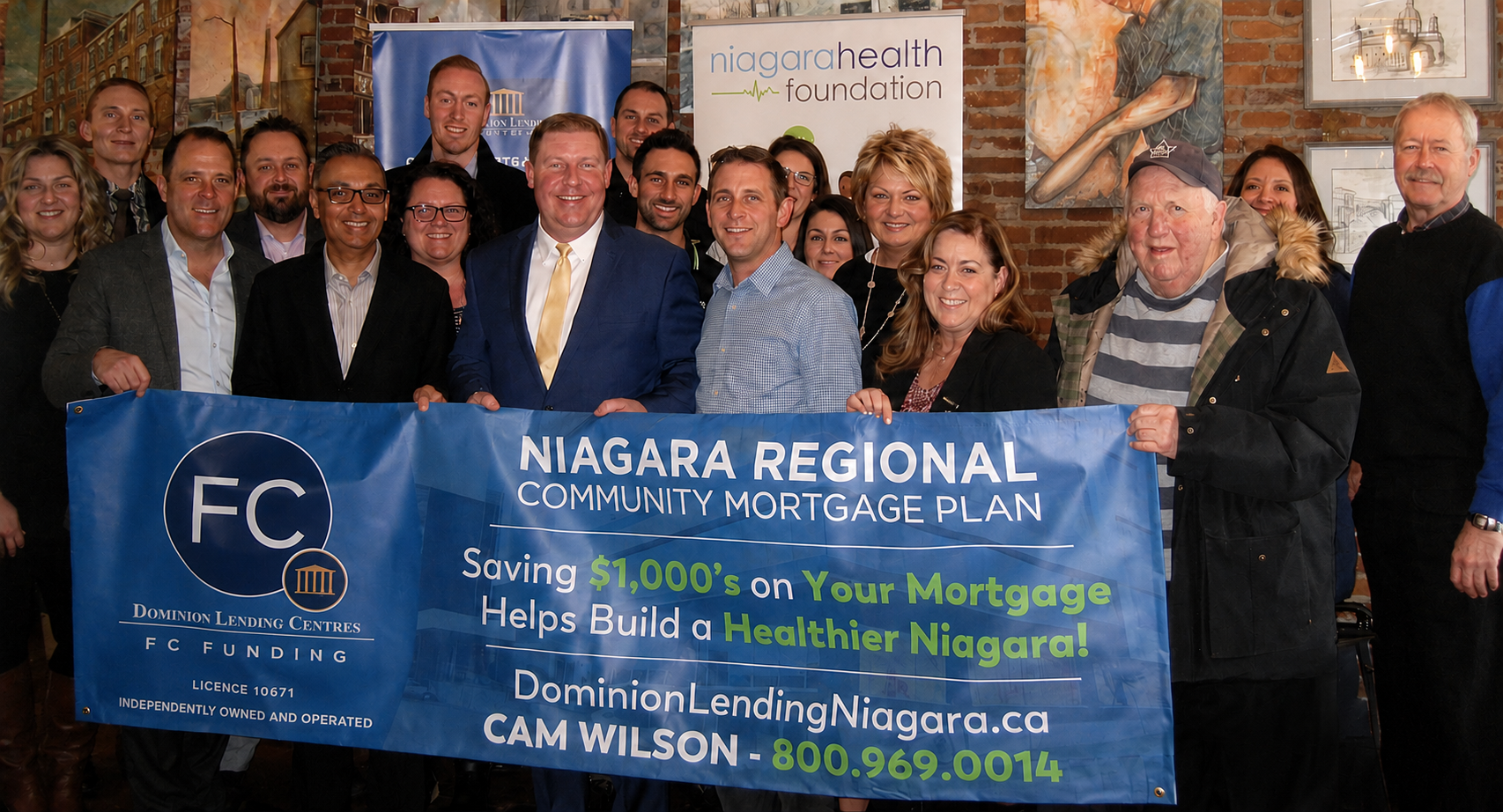
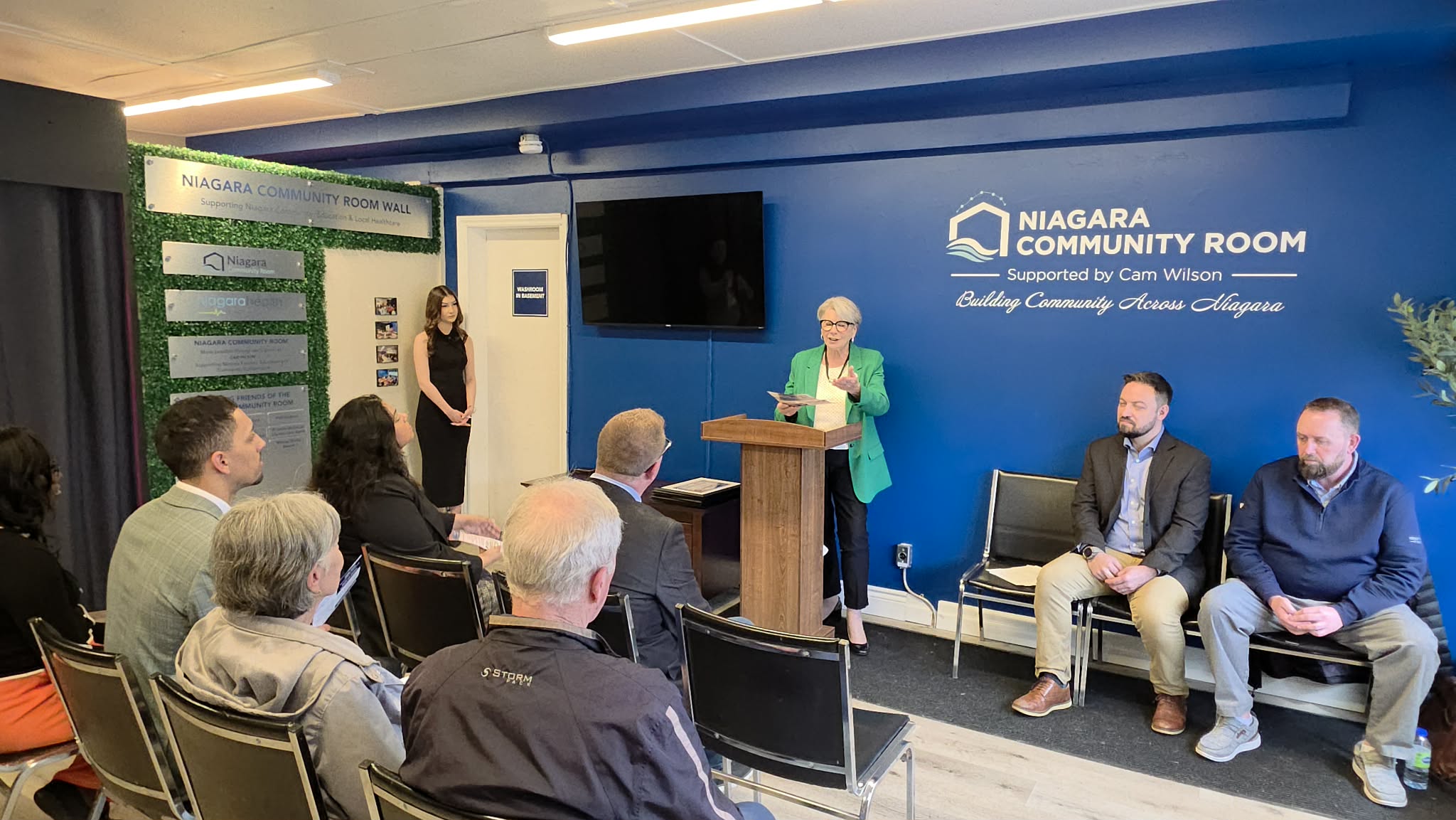
Beyond mortgage financing, our team supports local charitable initiatives, financial literacy programs, community partnerships, and projects the help strengthen Niagara.

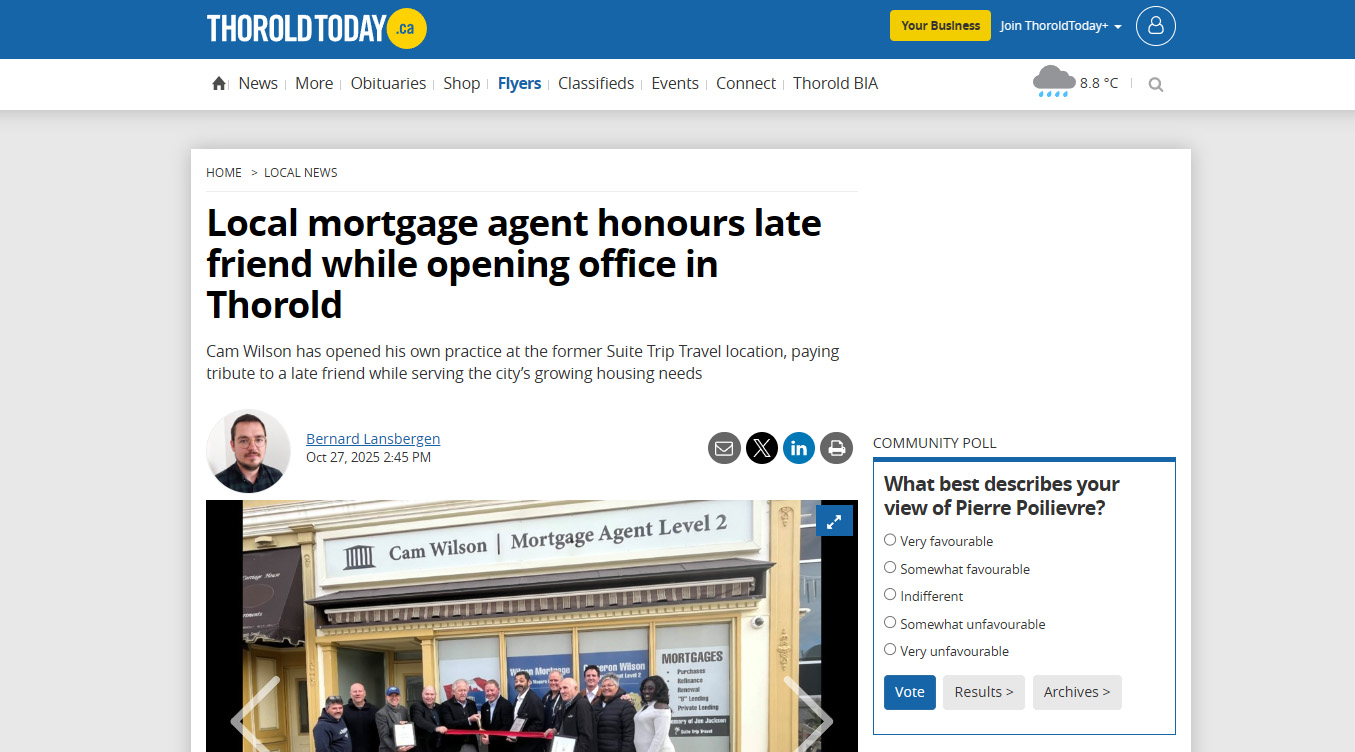
Letter from Regional Councillor Mike Britton Supporting Cam Wilson

How Can We Help?


Where do I begin to express my gratitude for Cam. We weren’t sure if we would even get approved for a mortgage. Cam met with us in person went over all our info. He got us approved for a mortgage and even got us an incredible interest rate. We got to house hunting right away and found our dream home. We now get to renovate and build a brand new fence and call this house a home. Thank you Cam for all your help. I’m a homeowner thanks to you!!!

Meaghan Mulcair
Mortgage Services and Options
Mortgage Services
Renewing Your Mortgage?
Don’t Sign Until You Review Your Options.
Most homeowners simply sign their bank’s renewal offer.
That may be convenient, but it isn’t always the best solution.
The Wilson Mortgage Team reviews mortgage renewals every day and helps clients explore:
Lower payment options
Debt consolidation opportunities
Improved cash flow
Better mortgage structures
Alternative lending solutions when needed
A 15-minute conversation could save thousands.
Serving Southern Ontario
With offices, meeting locations, virtual appointments, and mobile service options, the Wilson Mortgage Team helps clients throughout Niagara and across Southern Ontario.
Whether you prefer an in-person meeting or a virtual consultation, we’re available when and where you need us.
St. Catharines | Thorold | Niagara Falls | Welland | Port Colborne | Fort Erie | Pelham | Grimsby | West Lincoln | Niagara-on-the-Lake | Lincoln | Wainfleet | Dunnville | Burlington | Hamilton | Ancaster | Brantford | Woodstock | London | Mississauga | Oakville | Toronto | Barrie | Orillia | Newmarket | Simcoe


Over 90 Banks, Credit Unions & Lending Partners
No single lender is right for every borrower.
Our role is to compare solutions from a wide range of lending institutions to help identify the mortgage that best aligns with your goals.
More options.
More flexibility.
Better outcomes.


Lowest IRD Mortgage Penalties in Canada
Breaking your mortgage before the end of its term can cost thousands in penalties. Many Canadians face this situation when life changes unexpectedly — moving and renting, refinancing, divorce, job loss, illness, taking advantage of lower rates, pursuing an investment opportunity, or other urgent needs.
Research shows that approximately 60% of Canadian homeowners break their mortgage before the maturity date. For fixed-rate mortgages, this typically triggers a prepayment charge known as an Interest Rate Differential (IRD) penalty — often the largest and most costly type of mortgage penalty. Our research indicates that homeowners in the Niagara Region alone incur an estimated $150 million per year in IRD penalties, largely due to a lack of awareness about how these charges are calculated and how they can be minimized. Our role is to help you choose the right mortgage product from the start — one that provides flexibility, reduces the risk of costly penalties, and keeps more of your money where it belongs: in your pocket.
With our specialized expertise and broad access to lenders across the market, you can count on objective, impartial advice focused on maximizing your financial benefit as a mortgage consumer.
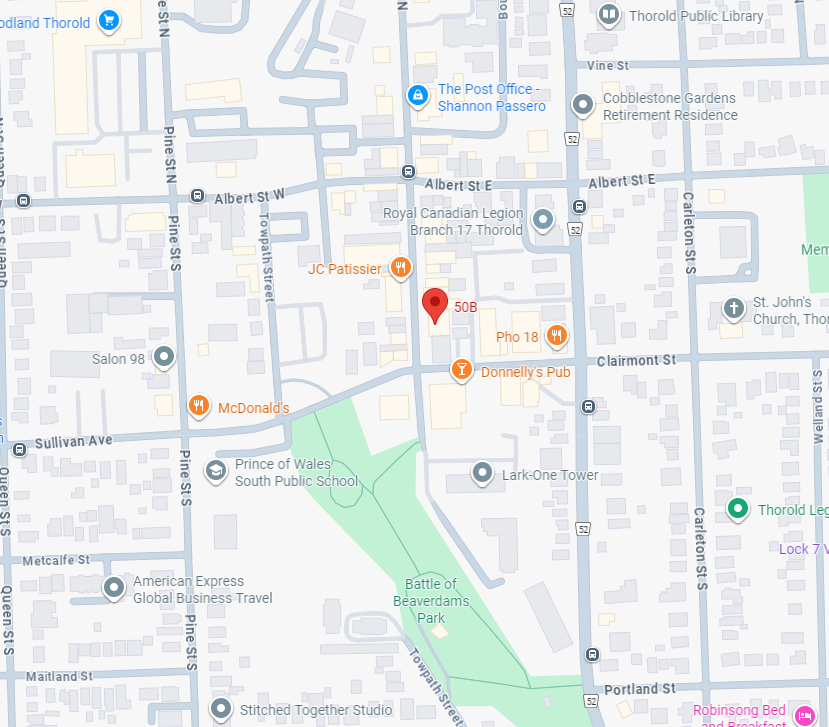
Where We’re Located & How To Reach Us
In-person appointments, virtual consultations, and mobile service through Niagara and Southern Ontario.

Book Your Mortgage Strategy Call
Every mortgage situation is different.
Tell us a little about your goals and a member of the Wilson Mortgage Team will reach out to discuss your options.