

Mortgage Broker Rates
When searching for financing on a home purchase, renewal, or refinance, understanding mortgage broker rates is one of the most consequential steps you can take. A mortgage broker rate refers to the interest rate a licensed mortgage broker secures on your behalf by shopping your application across multiple lending institutions -- including banks, credit unions, monoline lenders, and private lenders -- rather than limiting you to a single institution's posted rates. At Dominion Lending Niagara, the Wilson Mortgage Team leverages access to 90+ lending partners and 65+ years of combined experience to source competitive rates tailored to each client's financial profile across Niagara Region, Welland, Thorold, and throughout Southern Ontario.
How Mortgage Broker Rates Differ from Bank-Posted Rates
Banks and direct lenders publish what are commonly known as posted rates -- benchmark rates set at a institutional level that often serve as a negotiating ceiling rather than a final offer. Mortgage brokers, by contrast, operate under a wholesale lending model. Because brokers send significant loan volume to lenders, they negotiate volume-discount rates that individual borrowers rarely access on their own. This structural advantage means that mortgage broker rates are frequently 0.15% to 0.50% lower than what a borrower would receive walking directly into a single bank.
The practical impact of this difference is measurable. On a $450,000 mortgage amortized over 25 years, a rate reduction of 0.25% translates into approximately $12,000 to $15,000 in interest savings over a standard five-year term. The compounding benefit over a full amortization period is even more significant. Because brokers are compensated through finder's fees paid by the lender -- not by charging the borrower directly -- clients in most standard mortgage situations pay no fee to access this rate advantage.
The Factors That Determine Your Mortgage Rate
Mortgage broker rates are not a single number -- they are the output of an underwriting matrix that weighs several interconnected variables. Understanding these factors helps you position your application strategically.
- Credit Score: Lenders in Canada's A-lending tier (Schedule I and II banks, monoline lenders) typically require a minimum beacon score of 620 to 680. Scores above 720 generally unlock the most competitive rate tiers. Borrowers below these thresholds are assessed through B-lenders or private lending channels, which carry higher rates reflecting elevated lender risk.
- Loan-to-Value (LTV) Ratio: LTV is calculated by dividing the mortgage amount by the property's appraised value. Insured mortgages (LTV above 80%, requiring CMHC, Sagen, or Canada Guaranty insurance) paradoxically often carry lower interest rates because the lender's risk is backstopped by the insurer. Conventional mortgages with LTV at or below 80% avoid the insurance premium but may carry marginally higher rates depending on the lender.
- Amortization Period: Standard amortization runs to 25 years for insured mortgages and up to 30 years for conventional uninsured mortgages. Longer amortizations reduce monthly payments but can affect rate eligibility with certain lender tiers.
- Income Verification Type: Salaried employees with traditional T4 documentation qualify under standard underwriting. Self-employed borrowers, a significant portion of the client base served by the Wilson Mortgage Team in Niagara and Southern Ontario, may be assessed using stated income programs or alternative documentation, which affects rate and lender tier placement.
- Property Type and Location: Rural properties, condominiums with high maintenance fees, and certain property types carry adjusted risk weightings that influence lender appetite and pricing.
Fixed vs. Variable: Rate Structure Choices That Matter
A critical dimension of mortgage broker rates is the choice between fixed and variable rate structures. A fixed rate locks your interest rate for the full term -- typically one to five years -- providing payment certainty regardless of Bank of Canada policy rate movements. A variable rate is expressed as a discount or premium relative to the lender's prime rate (e.g., prime minus 0.80%) and fluctuates as prime changes, meaning your effective rate can rise or fall during the term.
Key Insight: Over long historical periods, borrowers who held variable rate mortgages paid less interest than those in fixed rate products -- but the advantage is not guaranteed in any specific cycle. The right structure depends on your cash flow tolerance, risk profile, and the current spread between fixed and variable offerings, which your broker should model explicitly for your situation.
Hybrid or combination mortgages -- where a portion is fixed and a portion is variable -- are also available through select lenders and can serve clients who want to hedge rate exposure without fully committing to either structure. A mortgage broker's role is to present these options with clear, data-backed projections rather than a one-size-fits-all recommendation.
Alternative and Private Lending Rate Considerations
Not every borrower qualifies within the A-lending tier. For clients navigating credit challenges, non-traditional income, recent mortgage arrears, or situations requiring rapid funding, alternative lending solutions are a structured and legitimate pathway. B-lenders (regulated institutions such as Home Trust, Equitable Bank, and similar) typically price mortgages between 1% and 3% above equivalent A-lender rates, with additional lender fees ranging from 0.50% to 1.00% of the mortgage amount. Private lenders -- individuals or mortgage investment corporations (MICs) -- operate with greater flexibility but charge rates that commonly range from 7% to 12%, with lender fees of 1% to 3%.
These rates reflect the risk premium associated with files that fall outside conventional underwriting criteria. The strategic value of working with a broker in these situations is significant: an experienced broker can identify the most competitively priced B or private lender for your specific profile, structure the mortgage to facilitate a transition back to A-lending at renewal, and avoid the compounding costs of repeated private mortgage placements. For clients in areas like Welland, Thorold, Fort Erie, and across Niagara Region, local knowledge of lender appetite for specific property types and locations is an added advantage the Wilson Mortgage Team brings to each file.
Practical Steps to Secure the Most Competitive Rate
- Pull and Review Your Credit Report Early: Obtain your Equifax and TransUnion reports before applying. Dispute any reporting errors, which can suppress your score artificially. Even a 20-point improvement in your beacon score can shift your rate tier meaningfully.
- Document Income Comprehensively: For salaried applicants, have your two most recent NOAs (Notices of Assessment), T4s, and a current employment letter prepared. Self-employed borrowers should have two years of corporate and personal returns ready and discuss stated income options with their broker upfront.
- Limit Hard Credit Inquiries: Multiple hard pulls from different lenders within a short window can modestly reduce your score. A mortgage broker submits a single application assessed across multiple lenders, avoiding repeated hard inquiries on your bureau.
- Understand Rate Hold Provisions: Most lenders allow brokers to secure a rate hold of 90 to 120 days on your behalf, protecting you against rate increases while your purchase or refinance completes. If rates decline during the hold period, many lenders will honour the lower rate at funding.
- Evaluate the Full Cost of Borrowing: Mortgage broker rates should always be evaluated alongside prepayment privilege terms, portability provisions, and penalty calculation methodologies. An IRD (Interest Rate Differential) penalty on a low fixed rate can cost more than the rate saving itself if you break the mortgage early. Your broker should provide a written comparison of total cost of borrowing across the options presented.
Frequently Asked Questions
Are mortgage broker rates lower than bank rates?
In most cases, yes. Mortgage brokers access wholesale or volume-discounted rates from 90 or more lenders, which are typically 0.15% to 0.50% lower than the posted rates available to individual borrowers walking directly into a single bank. The difference is structural -- brokers negotiate preferred pricing based on the volume of business they direct to each lender.
Do I pay a fee to a mortgage broker for finding me a rate?
For the majority of standard residential mortgage transactions, you pay no direct fee to the broker. The lending institution pays the broker a finder's fee, typically between 0.50% and 1.20% of the funded mortgage amount. In alternative or private lending situations, a broker fee payable by the borrower may apply and will be disclosed in writing before you commit.
How does a mortgage broker determine what rate I qualify for?
Your qualifying rate is determined by a combination of your credit score, income verification method, loan-to-value ratio, property type, and the mortgage term and structure you select. A broker collects this information, assesses your complete financial profile, and matches it against the underwriting criteria of multiple lenders to identify the most competitive rate tier available to you.
Can I get a good mortgage rate if I have bad credit?
Yes, though the rate will be higher than what A-lender clients receive. Borrowers with credit challenges are placed with B-lenders or private lenders, whose rates reflect the elevated risk. B-lender rates typically run 1% to 3% above prime-tier pricing. A skilled mortgage broker will structure the mortgage to position you for a return to conventional lending at your next renewal.
What is the difference between a fixed and variable mortgage broker rate?
A fixed rate remains constant for the duration of your mortgage term, providing payment predictability. A variable rate fluctuates in line with the lender's prime rate, which moves in response to Bank of Canada policy rate decisions. Variable rates are usually expressed as a discount or premium relative to prime, and your actual rate adjusts whenever prime changes during your term.
How long can a mortgage broker lock in a rate for me?
Most lenders allow mortgage brokers to secure a rate hold for 90 to 120 days from the date of application approval. This protects you from rate increases while your purchase or refinance transaction closes. If the lender's rate decreases before funding, many lenders will honour the lower rate at the time of closing.
Is the lowest mortgage rate always the best choice?
Not necessarily. The advertised rate must be evaluated alongside prepayment privileges, portability options, and the lender's penalty calculation method -- particularly for fixed rate mortgages, where an Interest Rate Differential penalty can far exceed any rate savings if you break the mortgage early. A qualified mortgage broker will model the total cost of borrowing, not just the rate, so you can make a fully informed decision.
Meet Cam Wilson & Wilson Mortgage Team
Mortgage, banking, underwriting, and lending expertise serving Southern Ontario.

Cam Wilson | Mortgage Agent Level 2
Founder & Team Lead
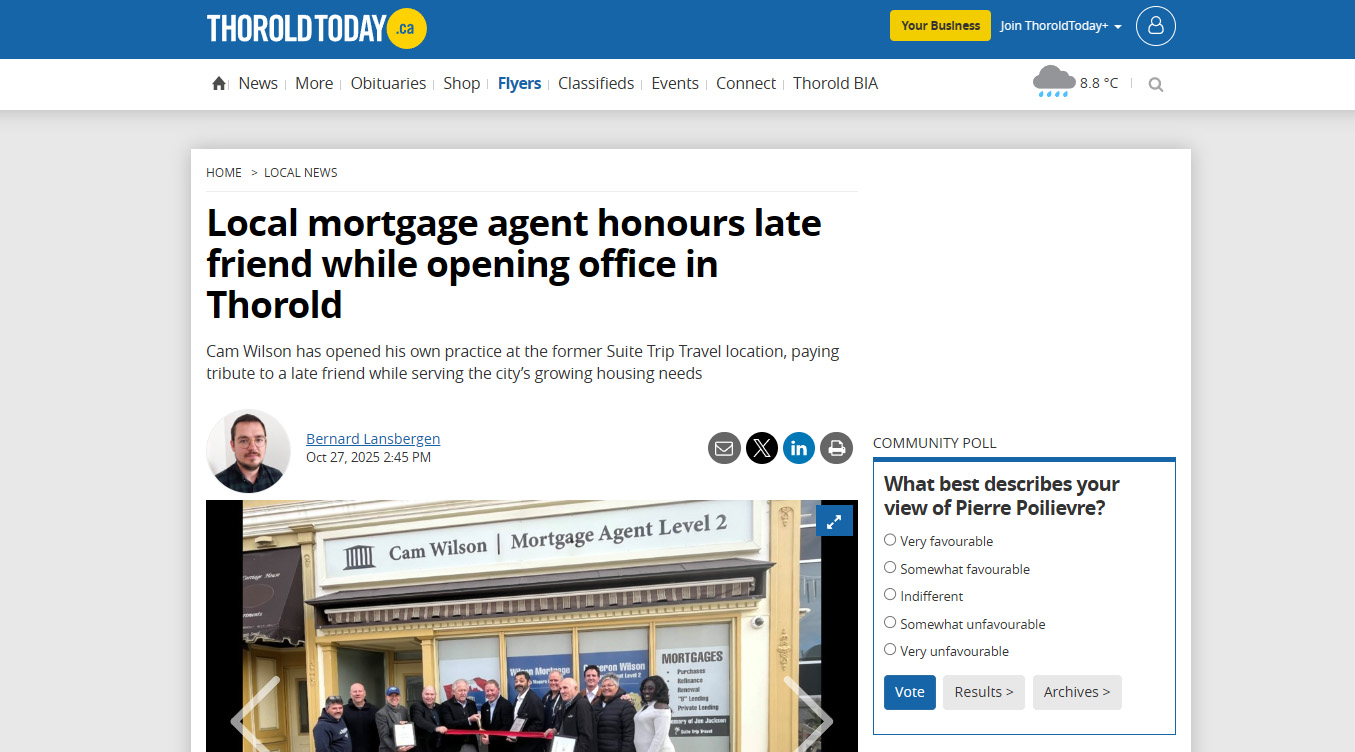
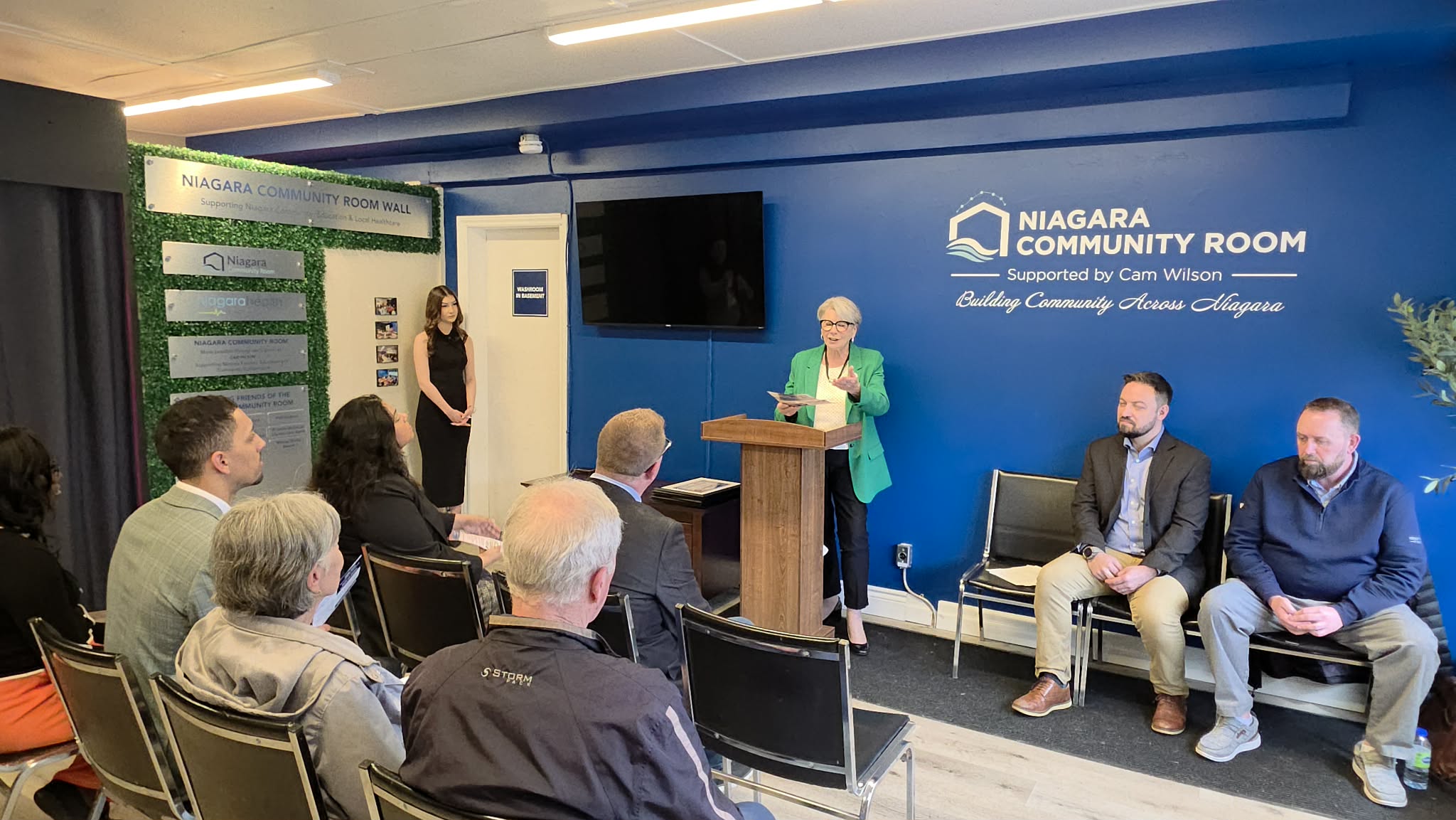
Cam Wilson has helped thousands of homeowners navigate mortgage financing throughout Niagara and Southern Ontario. He has also worked closely with local health care and local government to strengthen the local community through education on the Canadian banking and mortgage system.
Today, he leads the Wilson Mortgage Team, bringing together professionals with backgrounds in mortgage brokerage, banking, underwriting, lending, administration, and community engagement.
 Top 5% Mortgage Professional in Canada
160+ Five-Star Reviews
Thousands of Clients Assisted
Access to 90+ Lending Partners
Together, the Wilson Mortgage Team provides solutions for home purchases, renewals, refinancing, debt consolidation, alternative lending, private lending, reverse mortgages, and commercial financing.
Your Goals. Our Expertise. Your Future.
Mortgage Agents, Brokers & Industry Professionals — Learn How The Wilson Mortgage Team Can Help You Grow Your Business.
More Experience. More Perspectives. Better Outcomes.
The Wilson Mortgage Team combines over 65 years of mortgage, banking, underwriting, and lending experience to help homeowners, investors, and businesses across Niagara and Southern Ontario find the right mortgage solution.
Wilson Mortgage Team In The Community
THIRD-PARTY TRUST. COMMUNITY IMPACT. LOCAL LEADERSHIP
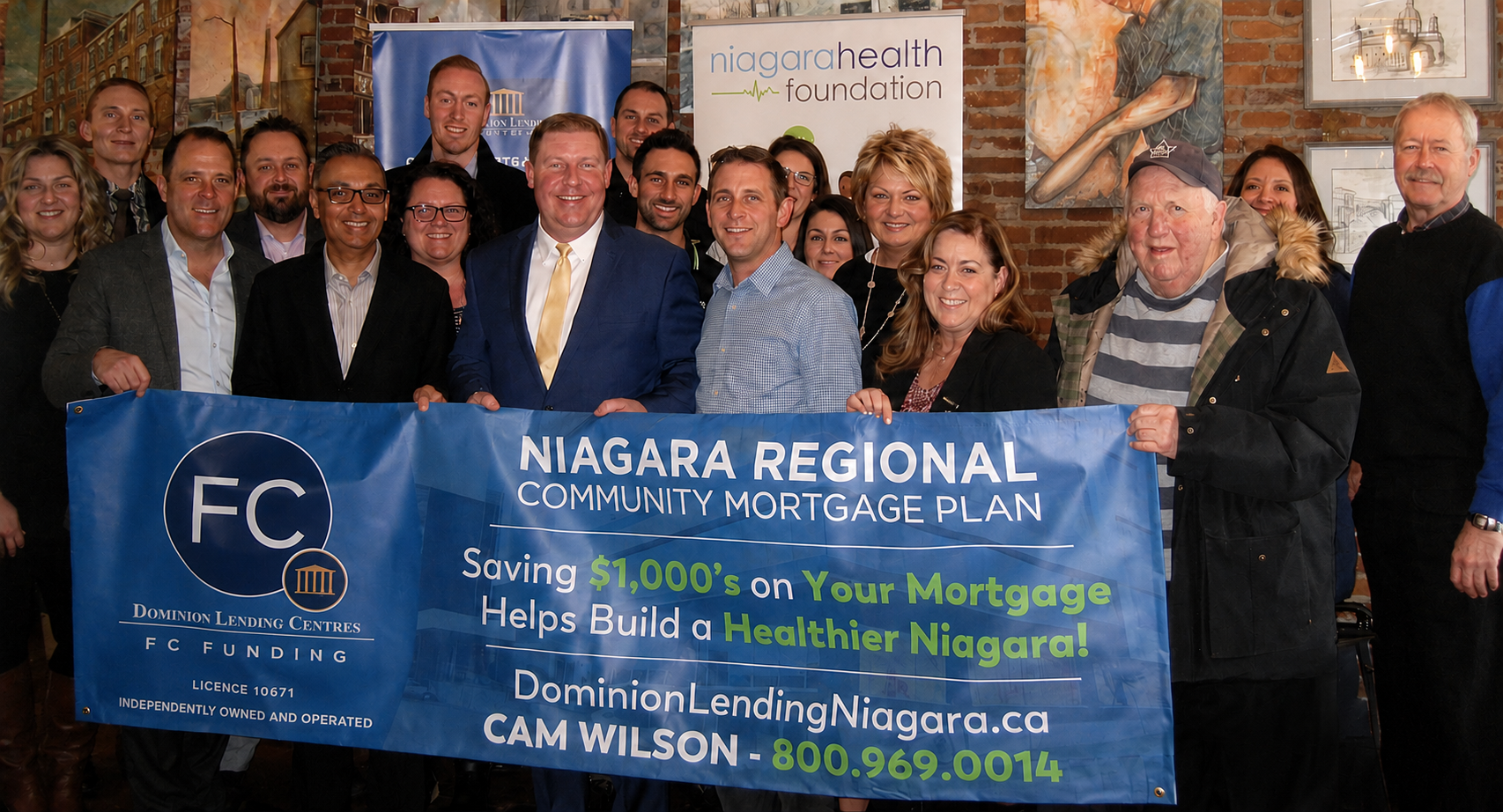
Beyond mortgage financing, our team supports local charitable initiatives, financial literacy programs, community partnerships, and projects the help strengthen Niagara.

Letter from Regional Councillor Mike Britton Supporting Cam Wilson

How Can We Help?


Where do I begin to express my gratitude for Cam. We weren’t sure if we would even get approved for a mortgage. Cam met with us in person went over all our info. He got us approved for a mortgage and even got us an incredible interest rate. We got to house hunting right away and found our dream home. We now get to renovate and build a brand new fence and call this house a home. Thank you Cam for all your help. I’m a homeowner thanks to you!!!

Meaghan Mulcair
Mortgage Services and Options
Mortgage Services
Renewing Your Mortgage?
Don’t Sign Until You Review Your Options.
Most homeowners simply sign their bank’s renewal offer.
That may be convenient, but it isn’t always the best solution.
The Wilson Mortgage Team reviews mortgage renewals every day and helps clients explore:
Lower payment options
Debt consolidation opportunities
Improved cash flow
Better mortgage structures
Alternative lending solutions when needed
A 15-minute conversation could save thousands.
Serving Southern Ontario
With offices, meeting locations, virtual appointments, and mobile service options, the Wilson Mortgage Team helps clients throughout Niagara and across Southern Ontario.
Whether you prefer an in-person meeting or a virtual consultation, we’re available when and where you need us.
St. Catharines | Thorold | Niagara Falls | Welland | Port Colborne | Fort Erie | Pelham | Grimsby | West Lincoln | Niagara-on-the-Lake | Lincoln | Wainfleet | Dunnville | Burlington | Hamilton | Ancaster | Brantford | Woodstock | London | Mississauga | Oakville | Toronto | Barrie | Orillia | Newmarket | Simcoe


Over 90 Banks, Credit Unions & Lending Partners
No single lender is right for every borrower.
Our role is to compare solutions from a wide range of lending institutions to help identify the mortgage that best aligns with your goals.
More options.
More flexibility.
Better outcomes.


Lowest IRD Mortgage Penalties in Canada
Breaking your mortgage before the end of its term can cost thousands in penalties. Many Canadians face this situation when life changes unexpectedly — moving and renting, refinancing, divorce, job loss, illness, taking advantage of lower rates, pursuing an investment opportunity, or other urgent needs.
Research shows that approximately 60% of Canadian homeowners break their mortgage before the maturity date. For fixed-rate mortgages, this typically triggers a prepayment charge known as an Interest Rate Differential (IRD) penalty — often the largest and most costly type of mortgage penalty. Our research indicates that homeowners in the Niagara Region alone incur an estimated $150 million per year in IRD penalties, largely due to a lack of awareness about how these charges are calculated and how they can be minimized. Our role is to help you choose the right mortgage product from the start — one that provides flexibility, reduces the risk of costly penalties, and keeps more of your money where it belongs: in your pocket.
With our specialized expertise and broad access to lenders across the market, you can count on objective, impartial advice focused on maximizing your financial benefit as a mortgage consumer.
Where We’re Located & How To Reach Us
In-person appointments, virtual consultations, and mobile service through Niagara and Southern Ontario.


Book Your Mortgage Strategy Call
Every mortgage situation is different.
Tell us a little about your goals and a member of the Wilson Mortgage Team will reach out to discuss your options.