

Fha Mortgage
When Canadian homebuyers search for an FHA mortgage, they are typically looking for what American borrowers access through the Federal Housing Administration - a low-down-payment, government-backed loan designed to help people with modest credit profiles or limited savings enter the housing market. While the FHA mortgage program does not exist in Canada, the underlying need it addresses is very real and very common. Buyers in Welland, Thorold, and across the Niagara Region frequently face the same challenges: limited upfront capital, imperfect credit histories, or non-traditional income. The good news is that Canada has its own set of programs and lending structures that serve the same purpose - and working with an experienced mortgage brokerage makes navigating those options significantly more effective.
This case study examines a real-world scenario faced by a first-time buyer in the Niagara Region who arrived in Canada searching specifically for an FHA mortgage equivalent, and how the Wilson Mortgage Team at dominionlendingniagara.ca helped them find a better-fitting solution. The analysis below walks through the problem, the approach used to evaluate options, and the measurable outcome that resulted.
The Problem: A New-to-Canada Buyer With Limited Credit History and a Tight Budget
Consider a buyer who relocated to Southern Ontario from abroad and had been renting in the Welland area for roughly 18 months. She had stable employment with a local manufacturer, earned a consistent income, and had saved approximately $28,000 toward a home purchase. After researching homeownership online, she encountered the term FHA mortgage repeatedly and assumed it applied to her situation in Canada. When she approached her bank directly, she was declined - not because she was unqualified in principle, but because the bank's internal criteria did not accommodate her thin Canadian credit file and the short tenure of her employment history in the country.
Her situation reflects a broader pattern. Many new Canadians, self-employed individuals, and buyers with past credit challenges are unfairly filtered out by traditional lenders whose automated underwriting systems are not designed for nuanced financial profiles. The result is discouragement and delay - sometimes lasting years - when workable solutions are actually available. When comparing a bank's rigid qualification matrix against the flexibility offered through a licensed mortgage broker with access to 90 or more lending partners, the difference in outcome can be significant.
Her key obstacles included:
- Less than two years of Canadian credit history with no established score above 600
- A down payment of just over 10 percent of the target purchase price
- Employment income that was verifiable but not yet supported by two full years of Canadian tax returns
- No existing Canadian mortgage or rental payment history documented through a financial institution
Each of these factors individually would not have eliminated her from all lending options. Combined, they created a profile that required a lender with a more analytical, case-by-case underwriting approach - precisely the type found in Canada's alternative and B-lending market.
The Approach: Matching the Right Canadian Lending Framework to the Client's Profile
The Wilson Mortgage Team, which holds a top 5 percent standing among mortgage professionals across Canada and carries over 65 years of combined team experience, began with a structured needs assessment. Rather than simply searching for an FHA mortgage equivalent by name, the team evaluated her file against four distinct lending tiers: insured conventional lending through CMHC or Sagen, uninsured conventional products, B-lender programs, and private mortgage options.
The data suggests that buyers with down payments between 5 and 19.99 percent are required under Canadian law to carry mortgage default insurance. This is functionally the closest Canadian parallel to an FHA mortgage - the insurance premium is added to the mortgage, reducing lender risk and allowing approval for buyers who might otherwise not qualify. Because her down payment fell in the 10 percent range, she was eligible for an insured mortgage with a smaller premium surcharge than if she had put down the minimum 5 percent.
The team's process included:
- Credit analysis and gap identification: Reviewing all tradelines, international credit history, and alternative proof of payment reliability such as rent receipts and utility accounts.
- Lender matrix mapping: Cross-referencing her file against the specific criteria of over 90 lending partners to identify the optimal tier and product.
- Documentation strategy: Compiling a lender package that told a complete story of her financial stability, including a letter of employment, 90 days of bank statements, and a reference from her previous landlord.
- Rate and term optimization: Comparing insured versus uninsured options, variable versus fixed rate structures, and the long-term cost of each scenario.
Because alternative lending in Canada operates through a layered system - from regulated B-lenders to licensed private lenders - the team identified a route through a Schedule B lender whose guidelines specifically accommodate new-to-Canada applicants with verifiable income. This is distinct from a conventional approval but carries standard registration terms and competitive rates relative to the risk profile. Clients seeking alternative lending in Welland often find this type of structured pathway delivers results that a direct bank application simply cannot replicate.
Those unfamiliar with Canada's lending landscape often ask whether an FHA mortgage can be accessed by purchasing property in Canada through a U.S. lender. The answer is no - FHA loans are issued for properties located within the United States and serviced in U.S. dollars. Canadian homebuyers must work within the domestic lending framework, which, when navigated by an experienced broker, offers comparable accessibility for qualified buyers.
For buyers exploring alternative lending in Niagara Falls or the surrounding communities, the range of available products is wider than most people realize. The Wilson Mortgage Team serves the full Niagara Region and Southern Ontario corridor, including Thorold, Welland, Fort Erie, Port Colborne, and Niagara-on-the-Lake, which means clients benefit from deep local market knowledge alongside access to national lender networks.
The final structure recommended was a 5-year fixed insured mortgage through a federally regulated alternative lender, with a blended rate that fell within 0.65 percent of the best available conventional rate at the time. The mortgage default insurance premium was rolled into the loan balance, keeping her out-of-pocket closing costs manageable and preserving a portion of her savings as an emergency reserve - a detail that matters significantly in the first years of homeownership.
For buyers dealing with past credit challenges, the path may involve exploring bad credit mortgage solutions in St. Catharines or working through a private mortgage arrangement in Fort Erie as a bridge toward conventional qualification. Every file is different, and the analytical value of working with a brokerage lies precisely in that case-by-case evaluation. The Wilson Mortgage Team's approach - rooted in data, lender relationships, and genuine client advocacy - consistently produces outcomes that a single-institution approach cannot replicate.
Frequently Asked Questions
Is there an FHA mortgage available in Canada?
No, the FHA mortgage is a U.S. government program administered by the Federal Housing Administration and is only available for properties located in the United States. Canadian homebuyers have access to comparable programs through CMHC-insured mortgages, Sagen, and Canada Guaranty, which similarly allow lower down payments and accommodate buyers with limited credit history. Working with a licensed Canadian mortgage broker is the most effective way to identify the right equivalent program for your situation.
What is the Canadian equivalent of an FHA mortgage?
The closest Canadian equivalent to an FHA mortgage is a high-ratio insured mortgage, where buyers with a down payment between 5 and 19.99 percent are required to purchase mortgage default insurance through CMHC, Sagen, or Canada Guaranty. This insurance protects the lender and allows buyers with more modest credit profiles or smaller down payments to access competitive mortgage rates. The insurance premium is typically added to the mortgage balance rather than paid upfront.
Can a new immigrant to Canada get a mortgage without a full Canadian credit history?
Yes, many lenders in Canada - particularly alternative and B-lenders - have specific programs for newcomers who lack an established Canadian credit score. These programs typically accept international credit history, employment letters, and bank statements as qualifying documentation. A mortgage broker with access to multiple lenders is better positioned than a single bank to match a newcomer's file to the right program.
What credit score do you need to get a mortgage in Canada with a low down payment?
For a CMHC-insured mortgage, most lenders require a minimum credit score of 680, though some insured products accept scores as low as 600 depending on the lender and file strength. Buyers below these thresholds may still qualify through B-lenders or private mortgage options, which evaluate the full financial picture rather than relying solely on credit score. The required score can vary significantly based on down payment size, income type, and the lender's internal guidelines.
What is mortgage default insurance and do I need it?
Mortgage default insurance is mandatory in Canada when a buyer's down payment is less than 20 percent of the purchase price. It protects the lender - not the borrower - in the event of default, but it enables lenders to offer lower interest rates to higher-risk borrowers than they otherwise would. The premium ranges from 0.60 to 4.00 percent of the mortgage amount depending on the loan-to-value ratio, and it is typically added to the mortgage balance.
Can self-employed buyers qualify for a mortgage in Canada?
Yes, self-employed buyers can qualify for mortgages in Canada, though the documentation requirements differ from salaried applicants. Lenders typically require two years of Notice of Assessment from the CRA, business financial statements, and sometimes a letter from an accountant. Alternative lenders and B-lender programs often have more flexible stated-income options for self-employed individuals who cannot fully document their income through traditional means.
What is a B-lender mortgage in Canada and when should I consider one?
A B-lender mortgage in Canada is issued by a federally or provincially regulated financial institution that operates outside the traditional chartered bank system, accepting clients who do not meet standard prime lending criteria. Common reasons to consider a B-lender include a recent credit event, non-traditional income, or a short employment history. Rates are typically 0.50 to 2.00 percent higher than prime rates, and most clients transition to a conventional lender at renewal once their qualifying profile improves.
Meet Cam Wilson & Wilson Mortgage Team
Mortgage, banking, underwriting, and lending expertise serving Southern Ontario.

Cam Wilson | Mortgage Agent Level 2
Founder & Team Lead
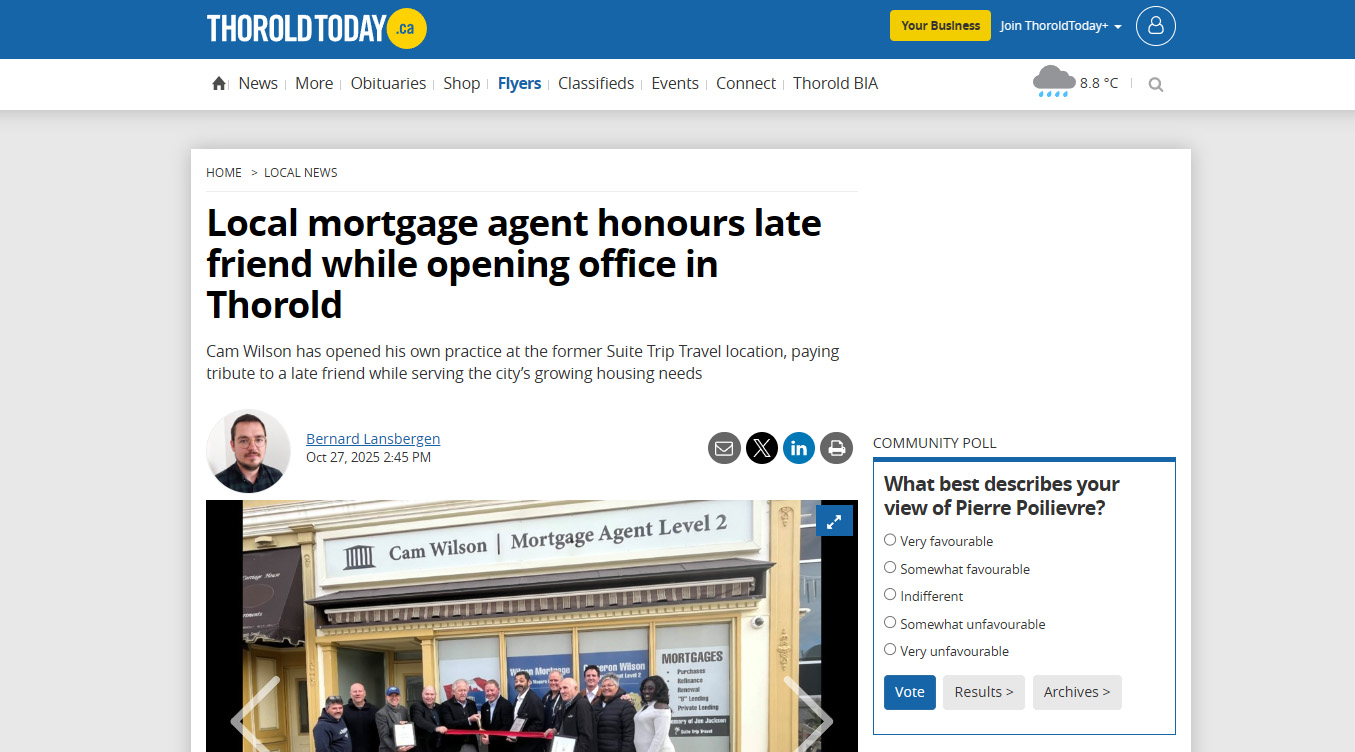
Cam Wilson has helped thousands of homeowners navigate mortgage financing throughout Niagara and Southern Ontario. He has also worked closely with local health care and local government to strengthen the local community through education on the Canadian banking and mortgage system.
Today, he leads the Wilson Mortgage Team, bringing together professionals with backgrounds in mortgage brokerage, banking, underwriting, lending, administration, and community engagement.
 Top 5% Mortgage Professional in Canada
160+ Five-Star Reviews
Thousands of Clients Assisted
Access to 90+ Lending Partners
Together, the Wilson Mortgage Team provides solutions for home purchases, renewals, refinancing, debt consolidation, alternative lending, private lending, reverse mortgages, and commercial financing.
Your Goals. Our Expertise. Your Future.
Mortgage Agents, Brokers & Industry Professionals — Learn How The Wilson Mortgage Team Can Help You Grow Your Business.
More Experience. More Perspectives. Better Outcomes.
The Wilson Mortgage Team combines over 65 years of mortgage, banking, underwriting, and lending experience to help homeowners, investors, and businesses across Niagara and Southern Ontario find the right mortgage solution.
Wilson Mortgage Team In The Community
THIRD-PARTY TRUST. COMMUNITY IMPACT. LOCAL LEADERSHIP
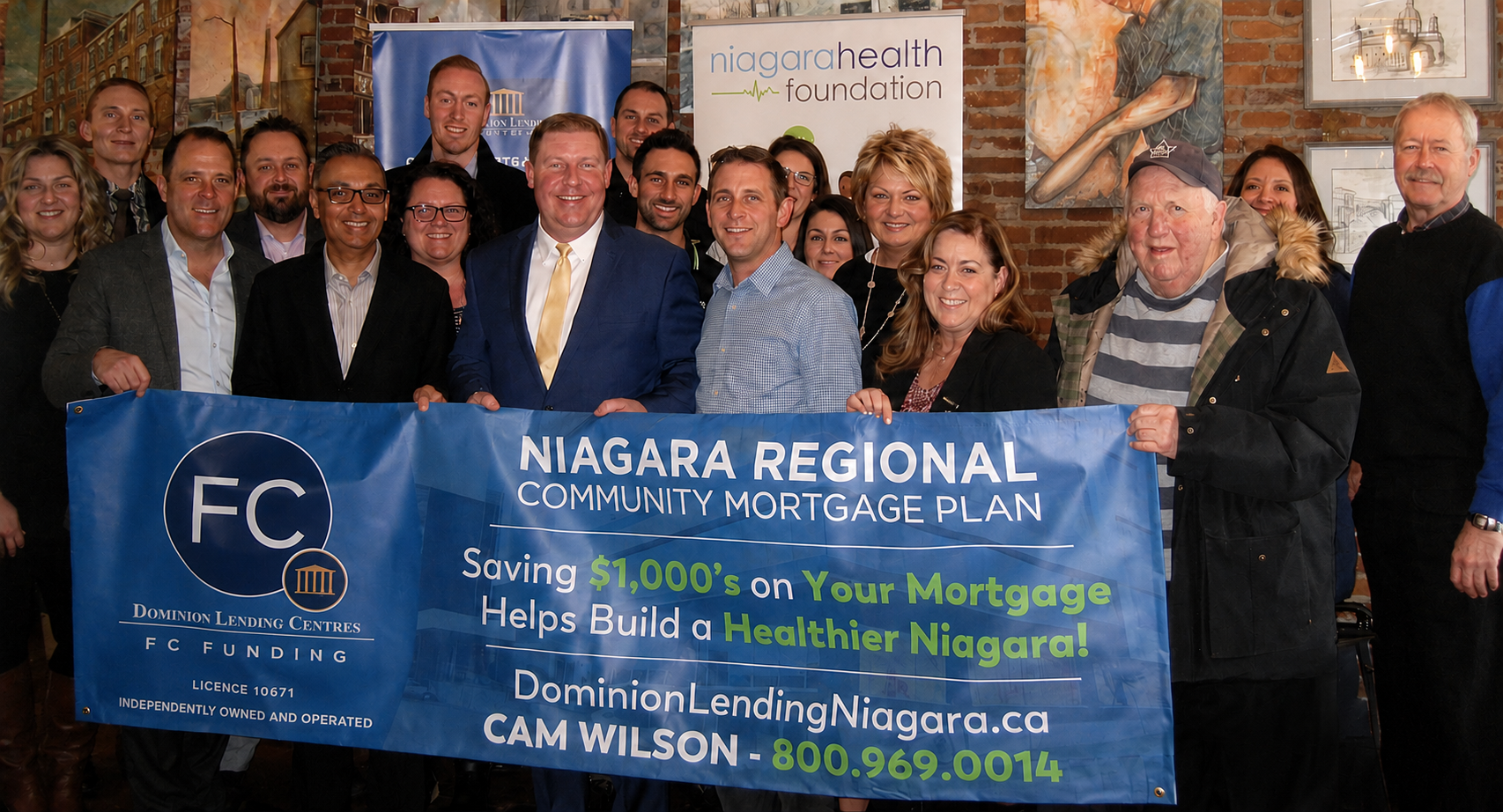
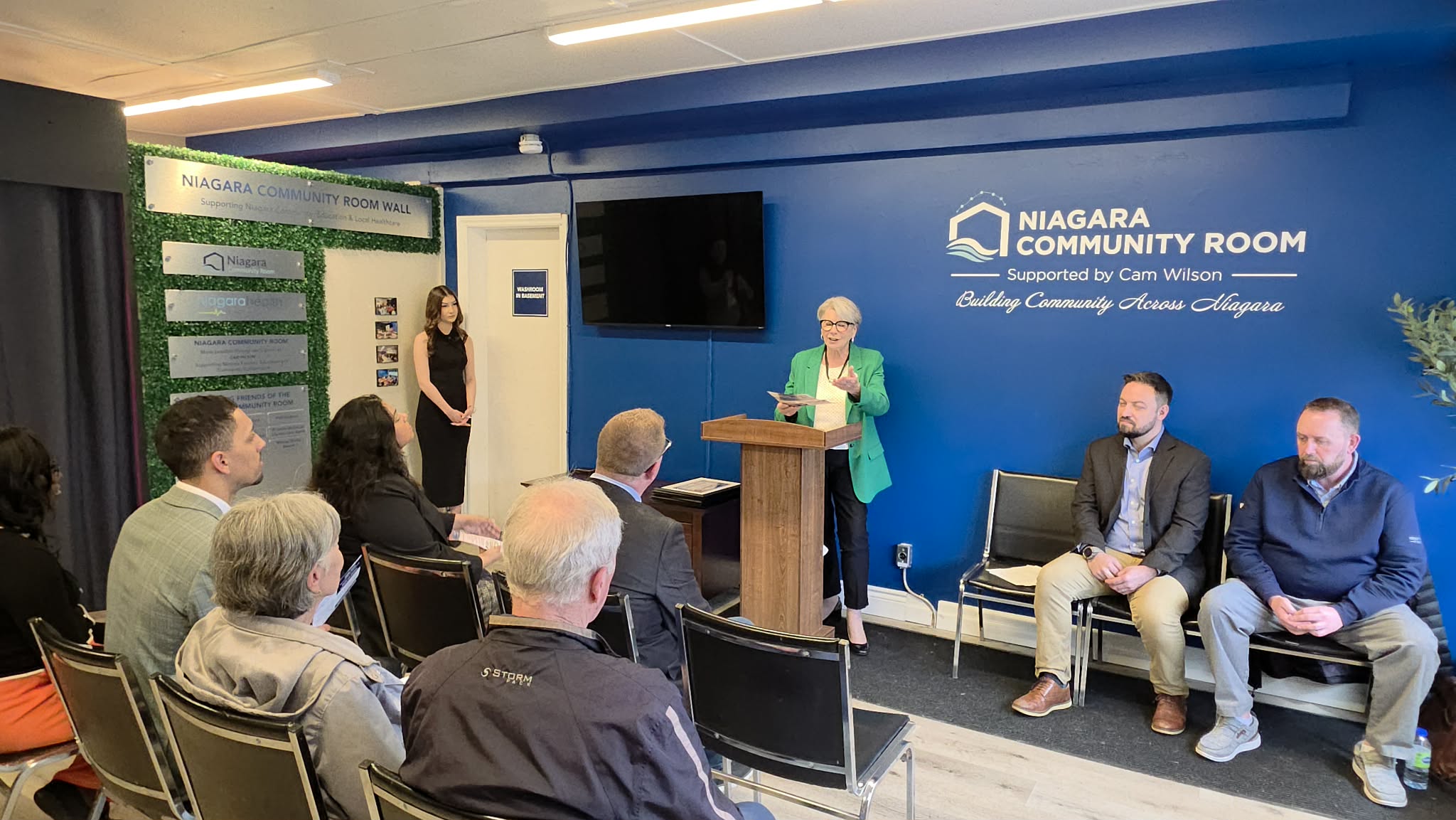
Beyond mortgage financing, our team supports local charitable initiatives, financial literacy programs, community partnerships, and projects the help strengthen Niagara.

Letter from Regional Councillor Mike Britton Supporting Cam Wilson

How Can We Help?


Where do I begin to express my gratitude for Cam. We weren’t sure if we would even get approved for a mortgage. Cam met with us in person went over all our info. He got us approved for a mortgage and even got us an incredible interest rate. We got to house hunting right away and found our dream home. We now get to renovate and build a brand new fence and call this house a home. Thank you Cam for all your help. I’m a homeowner thanks to you!!!

Meaghan Mulcair
Mortgage Services and Options
Mortgage Services
Renewing Your Mortgage?
Don’t Sign Until You Review Your Options.
Most homeowners simply sign their bank’s renewal offer.
That may be convenient, but it isn’t always the best solution.
The Wilson Mortgage Team reviews mortgage renewals every day and helps clients explore:
Lower payment options
Debt consolidation opportunities
Improved cash flow
Better mortgage structures
Alternative lending solutions when needed
A 15-minute conversation could save thousands.
Serving Southern Ontario
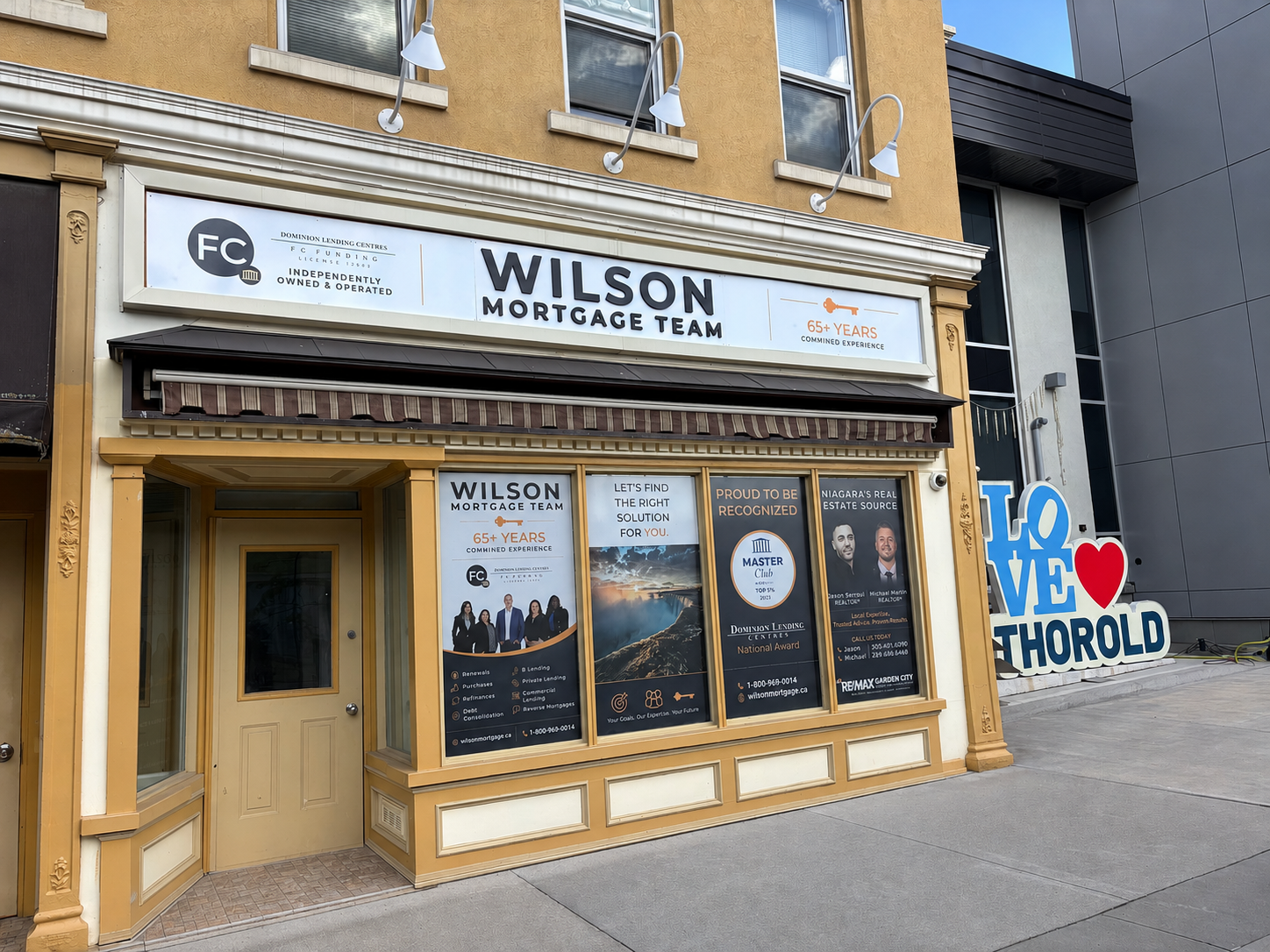
With offices, meeting locations, virtual appointments, and mobile service options, the Wilson Mortgage Team helps clients throughout Niagara and across Southern Ontario.
Whether you prefer an in-person meeting or a virtual consultation, we’re available when and where you need us.
St. Catharines | Thorold | Niagara Falls | Welland | Port Colborne | Fort Erie | Pelham | Grimsby | West Lincoln | Niagara-on-the-Lake | Lincoln | Wainfleet | Dunnville | Burlington | Hamilton | Ancaster | Brantford | Woodstock | London | Mississauga | Oakville | Toronto | Barrie | Orillia | Newmarket | Simcoe
Over 90 Banks, Credit Unions & Lending Partners
No single lender is right for every borrower.
Our role is to compare solutions from a wide range of lending institutions to help identify the mortgage that best aligns with your goals.
More options.
More flexibility.
Better outcomes.


Lowest IRD Mortgage Penalties in Canada
Breaking your mortgage before the end of its term can cost thousands in penalties. Many Canadians face this situation when life changes unexpectedly — moving and renting, refinancing, divorce, job loss, illness, taking advantage of lower rates, pursuing an investment opportunity, or other urgent needs.
Research shows that approximately 60% of Canadian homeowners break their mortgage before the maturity date. For fixed-rate mortgages, this typically triggers a prepayment charge known as an Interest Rate Differential (IRD) penalty — often the largest and most costly type of mortgage penalty. Our research indicates that homeowners in the Niagara Region alone incur an estimated $150 million per year in IRD penalties, largely due to a lack of awareness about how these charges are calculated and how they can be minimized. Our role is to help you choose the right mortgage product from the start — one that provides flexibility, reduces the risk of costly penalties, and keeps more of your money where it belongs: in your pocket.
With our specialized expertise and broad access to lenders across the market, you can count on objective, impartial advice focused on maximizing your financial benefit as a mortgage consumer.
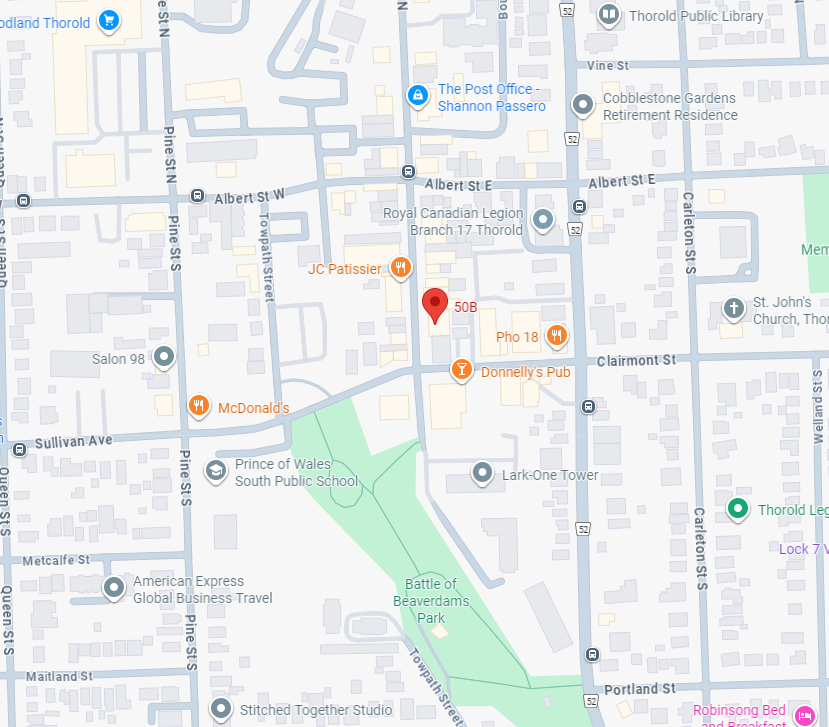
Where We’re Located & How To Reach Us
In-person appointments, virtual consultations, and mobile service through Niagara and Southern Ontario.

Book Your Mortgage Strategy Call
Every mortgage situation is different.
Tell us a little about your goals and a member of the Wilson Mortgage Team will reach out to discuss your options.