

Biggest Mortgage Lenders
When searching for financing, understanding how the biggest mortgage lenders in Canada differ from one another is one of the most valuable steps a borrower can take. The term "biggest mortgage lenders" typically refers to major Schedule A banks like RBC, TD, Scotiabank, BMO, and CIBC, as well as credit unions, monoline lenders, and alternative or private lenders. Each category operates under different approval criteria, rate structures, and flexibility levels. Because the right lender depends heavily on your personal financial profile, property type, and long-term goals, a structured comparison approach will save you both time and money. This guide walks you through a clear analytical framework for evaluating your options, whether you are a first-time buyer, an existing homeowner in Welland or Thorold, or a self-employed professional across Southern Ontario.
Step 1: Understand the Landscape of Mortgage Lenders Before You Compare
The Canadian mortgage market is divided into distinct tiers, and each tier serves a different borrower profile. The biggest mortgage lenders by volume are the major banks, which offer broad product suites, branch access, and brand recognition. However, branch-based banks are often less flexible on qualification criteria and may bundle mortgage products with other banking services in ways that are not always in the borrower's best interest. Monoline lenders, by contrast, focus exclusively on mortgages and frequently offer more competitive rates because their overhead is lower and their product focus is narrower.
Beyond these two primary categories, credit unions offer locally governed alternatives that can be particularly useful for borrowers with non-traditional employment or regional ties, while private and alternative lenders serve those who do not qualify under standard stress-test rules. When comparing lenders across tiers, it is useful to evaluate them across five dimensions: rate competitiveness, qualification flexibility, prepayment privileges, portability options, and penalty structures. The data suggests that borrowers who evaluate all five dimensions before committing save an average of thousands of dollars over the life of their mortgage compared to those who focus on rate alone.
| Lender Type | Typical Borrower Fit | Rate Competitiveness | Flexibility | Approval Criteria |
|---|---|---|---|---|
| Major Banks (A Lenders) | Strong credit, salaried income | Moderate | Low to Moderate | Strict (stress test applies) |
| Monoline Lenders | Qualified buyers seeking best rate | High | Moderate | Strict (stress test applies) |
| Credit Unions | Local borrowers, some flexibility | Moderate | Moderate to High | Moderate (some exempt from stress test) |
| B Lenders | Bruised credit, recent self-employment | Moderate | High | Flexible |
| Private Lenders | Complex situations, bridge financing | Lower (higher rates) | Very High | Asset-based, minimal income proof |
Step 2: Match Your Financial Profile to the Right Lender Tier
Once you understand the landscape, the next step is an honest assessment of your own financial profile. Pull your credit score, calculate your total debt service ratio, and document your income sources before approaching any lender. Borrowers with a credit score above 680 and stable salaried income will generally qualify with the biggest mortgage lenders at the most competitive rates. However, if your score falls below that threshold, or if your income is commission-based, seasonal, or derived from self-employment, you may find that major banks decline your application or offer significantly less favorable terms than a broker-accessed monoline or B lender would provide.
Working with a mortgage broker gives you access to the full spectrum of lenders from a single point of contact. At dominionlendingniagara.ca, the Wilson Mortgage Team provides access to 90+ lending partners across Niagara Region and Southern Ontario, including options for borrowers in Welland, Thorold, and surrounding communities who may not fit the standard bank mold. Because brokers are compensated by lenders rather than borrowers in most cases, their incentive is aligned with finding the best possible fit rather than pushing a single product. The data suggests that broker-sourced mortgages result in measurably better rate outcomes for a significant percentage of borrowers, particularly those in the alternative lending tier.
After matching your profile to a lender tier, request mortgage pre-approvals from at least two or three sources within a short window. Credit bureaus treat multiple mortgage inquiries within a 14-to-45-day window as a single inquiry, which means shopping does not materially damage your credit score. Use the pre-approval letters to compare not just the offered rate but the full cost of the mortgage, including discharge fees, prepayment penalty structures, and whether the product is open or closed. A closed five-year fixed mortgage from one of the biggest mortgage lenders may carry an interest rate differential penalty that could cost tens of thousands of dollars if you need to break it early, whereas a monoline lender with a three-month interest penalty structure may serve you far better over a realistic ownership horizon. Choosing the right lender is ultimately about matching the product structure to your life plans, not just your current financial snapshot.
Frequently Asked Questions
Who are the biggest mortgage lenders in Canada?
The biggest mortgage lenders in Canada by volume are the Big Six banks: RBC, TD, Scotiabank, BMO, CIBC, and National Bank. Beyond these, major monoline lenders like First National, MCAP, and Merix Financial also hold significant market share. Credit unions and alternative lenders round out the full landscape available to Canadian borrowers.
Is it better to go with a big bank or a mortgage broker for a home loan?
A big bank offers one lender's products, while a mortgage broker provides access to dozens of lenders including banks, monolines, and alternative options. Because brokers shop the market on your behalf, they often secure more competitive rates and terms, particularly for borrowers with complex income or credit profiles. For most borrowers, engaging a broker first costs nothing and provides a broader view of available options.
Do the biggest mortgage lenders have the lowest rates?
Not necessarily. Major banks often post higher rates and rely on borrowers not negotiating, while monoline lenders that operate exclusively in mortgages frequently offer lower rates due to reduced overhead. The data consistently shows that posted bank rates are a starting point for negotiation, not the final offer. Shopping across lender types through a broker typically yields better results than going directly to a single institution.
What is the difference between an A lender and a B lender in Canada?
A lenders, which include the major banks and most credit unions, require borrowers to pass the federal mortgage stress test and meet strict debt and income criteria. B lenders, also called alternative lenders, serve borrowers who do not meet A lender standards due to credit issues, recent self-employment, or non-traditional income sources. B lender rates are typically higher, but they provide an important pathway to homeownership for borrowers who are working toward A lender qualification.
Can I get a mortgage from a big lender if I am self-employed?
Yes, but qualifying can be more challenging because major banks typically use net income after deductions, which self-employed borrowers often report lower due to business expenses. Some of the biggest mortgage lenders offer stated-income or business-for-self programs with additional documentation requirements. For many self-employed borrowers, alternative lenders or broker-negotiated programs provide a more realistic path to approval.
How do mortgage penalties differ between big banks and other lenders?
Major banks typically calculate prepayment penalties using the Interest Rate Differential method, which can result in penalties of tens of thousands of dollars if you break a fixed-rate mortgage early. Monoline lenders and many alternative lenders use simpler three-month interest penalties, which are significantly lower in most scenarios. Comparing penalty structures is one of the most financially impactful steps a borrower can take before committing to any mortgage product.
What should I look for beyond the interest rate when comparing mortgage lenders?
Beyond the rate, borrowers should evaluate prepayment privileges, which allow you to pay down principal faster without penalty, as well as portability options if you plan to move, and the penalty structure if you need to break the mortgage early. Lender flexibility around payment deferrals, blend-and-extend options, and renewal terms also materially affects total cost. A lower rate with a harsh penalty clause can easily cost more than a slightly higher rate with borrower-friendly terms.
Meet Cam Wilson & Wilson Mortgage Team
Mortgage, banking, underwriting, and lending expertise serving Southern Ontario.

Cam Wilson | Mortgage Agent Level 2
Founder & Team Lead
Cam Wilson has helped thousands of homeowners navigate mortgage financing throughout Niagara and Southern Ontario. He has also worked closely with local health care and local government to strengthen the local community through education on the Canadian banking and mortgage system.
Today, he leads the Wilson Mortgage Team, bringing together professionals with backgrounds in mortgage brokerage, banking, underwriting, lending, administration, and community engagement.
 Top 5% Mortgage Professional in Canada
160+ Five-Star Reviews
Thousands of Clients Assisted
Access to 90+ Lending Partners
Together, the Wilson Mortgage Team provides solutions for home purchases, renewals, refinancing, debt consolidation, alternative lending, private lending, reverse mortgages, and commercial financing.
Your Goals. Our Expertise. Your Future.
Mortgage Agents, Brokers & Industry Professionals — Learn How The Wilson Mortgage Team Can Help You Grow Your Business.
More Experience. More Perspectives. Better Outcomes.
The Wilson Mortgage Team combines over 65 years of mortgage, banking, underwriting, and lending experience to help homeowners, investors, and businesses across Niagara and Southern Ontario find the right mortgage solution.
Wilson Mortgage Team In The Community
THIRD-PARTY TRUST. COMMUNITY IMPACT. LOCAL LEADERSHIP
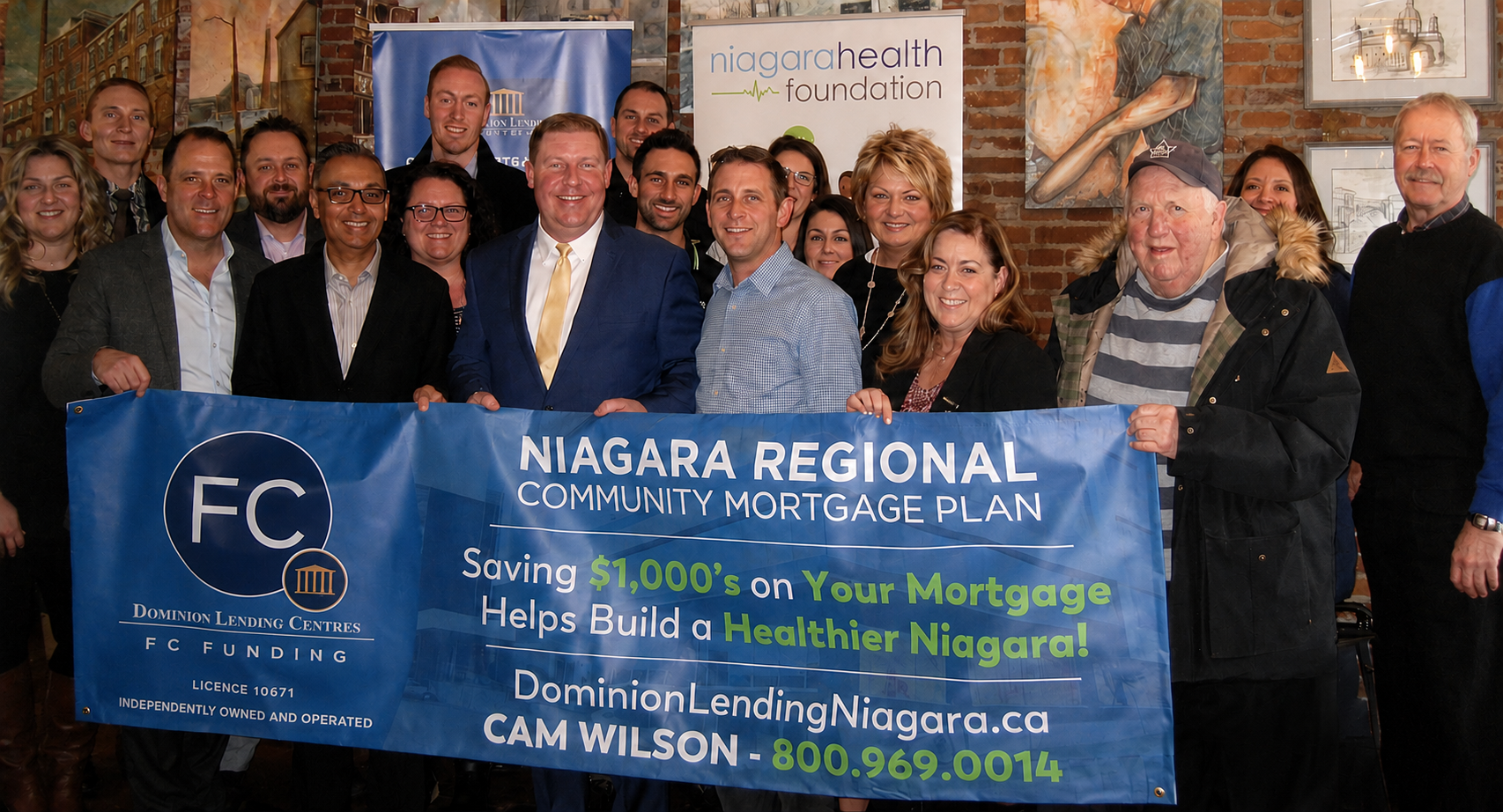
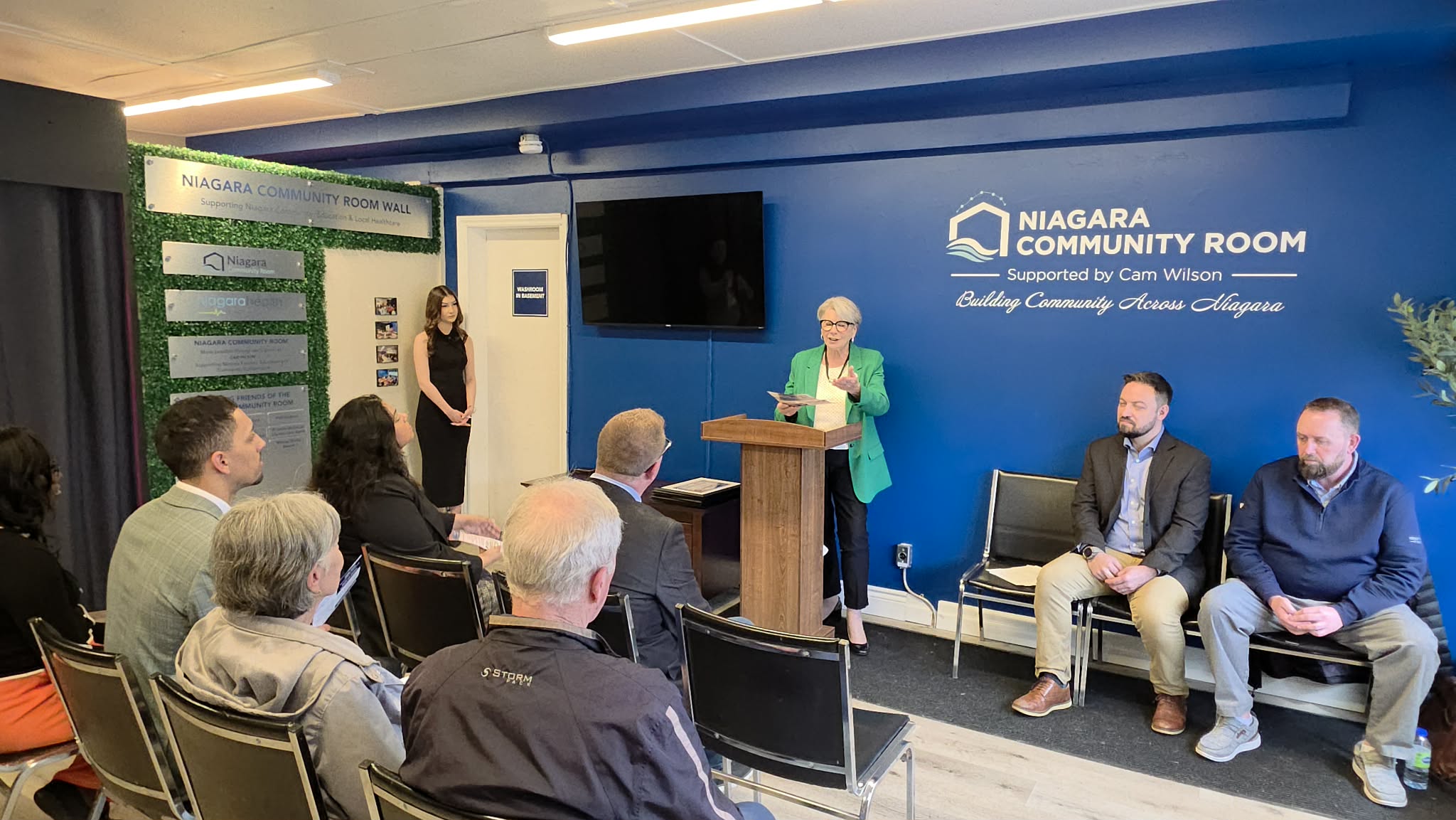
Beyond mortgage financing, our team supports local charitable initiatives, financial literacy programs, community partnerships, and projects the help strengthen Niagara.

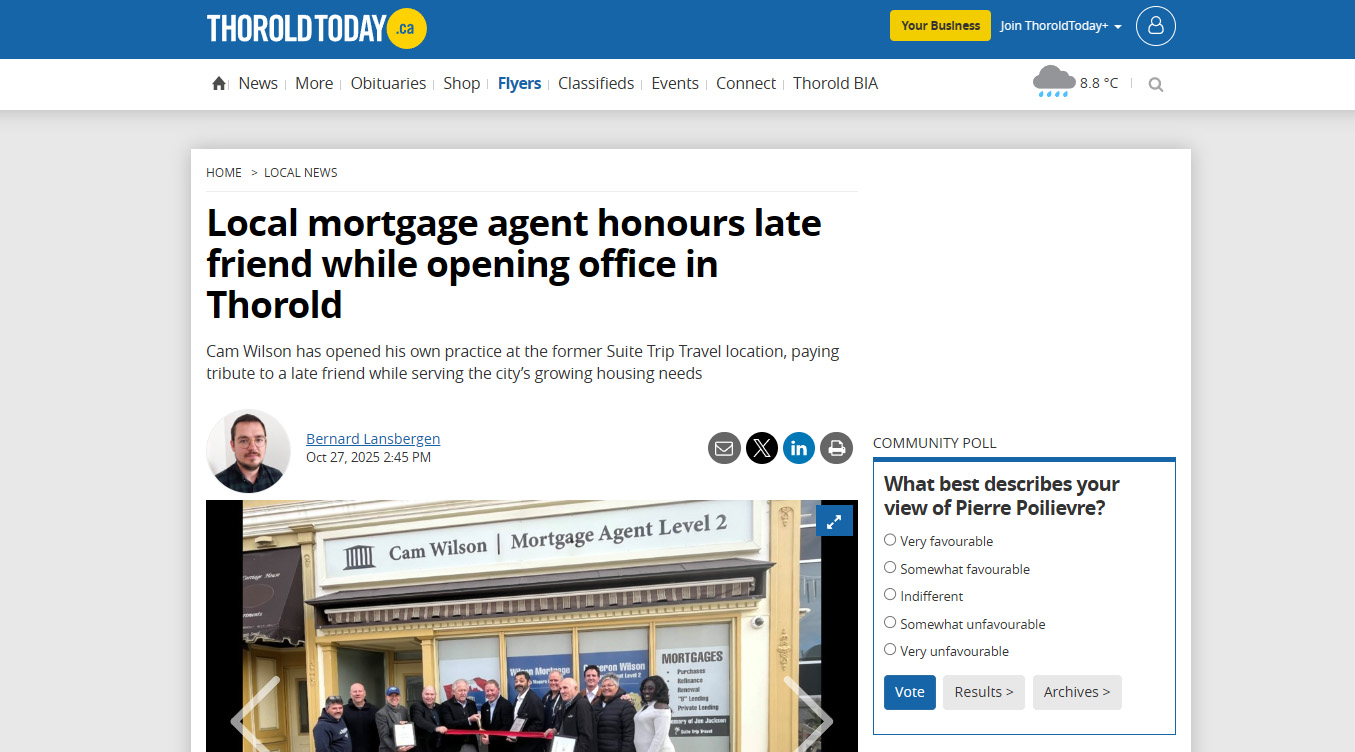
Letter from Regional Councillor Mike Britton Supporting Cam Wilson

How Can We Help?


Where do I begin to express my gratitude for Cam. We weren’t sure if we would even get approved for a mortgage. Cam met with us in person went over all our info. He got us approved for a mortgage and even got us an incredible interest rate. We got to house hunting right away and found our dream home. We now get to renovate and build a brand new fence and call this house a home. Thank you Cam for all your help. I’m a homeowner thanks to you!!!

Meaghan Mulcair
Mortgage Services and Options
Mortgage Services
Renewing Your Mortgage?
Don’t Sign Until You Review Your Options.
Most homeowners simply sign their bank’s renewal offer.
That may be convenient, but it isn’t always the best solution.
The Wilson Mortgage Team reviews mortgage renewals every day and helps clients explore:
Lower payment options
Debt consolidation opportunities
Improved cash flow
Better mortgage structures
Alternative lending solutions when needed
A 15-minute conversation could save thousands.
Serving Southern Ontario
With offices, meeting locations, virtual appointments, and mobile service options, the Wilson Mortgage Team helps clients throughout Niagara and across Southern Ontario.
Whether you prefer an in-person meeting or a virtual consultation, we’re available when and where you need us.
St. Catharines | Thorold | Niagara Falls | Welland | Port Colborne | Fort Erie | Pelham | Grimsby | West Lincoln | Niagara-on-the-Lake | Lincoln | Wainfleet | Dunnville | Burlington | Hamilton | Ancaster | Brantford | Woodstock | London | Mississauga | Oakville | Toronto | Barrie | Orillia | Newmarket | Simcoe


Over 90 Banks, Credit Unions & Lending Partners
No single lender is right for every borrower.
Our role is to compare solutions from a wide range of lending institutions to help identify the mortgage that best aligns with your goals.
More options.
More flexibility.
Better outcomes.


Lowest IRD Mortgage Penalties in Canada
Breaking your mortgage before the end of its term can cost thousands in penalties. Many Canadians face this situation when life changes unexpectedly — moving and renting, refinancing, divorce, job loss, illness, taking advantage of lower rates, pursuing an investment opportunity, or other urgent needs.
Research shows that approximately 60% of Canadian homeowners break their mortgage before the maturity date. For fixed-rate mortgages, this typically triggers a prepayment charge known as an Interest Rate Differential (IRD) penalty — often the largest and most costly type of mortgage penalty. Our research indicates that homeowners in the Niagara Region alone incur an estimated $150 million per year in IRD penalties, largely due to a lack of awareness about how these charges are calculated and how they can be minimized. Our role is to help you choose the right mortgage product from the start — one that provides flexibility, reduces the risk of costly penalties, and keeps more of your money where it belongs: in your pocket.
With our specialized expertise and broad access to lenders across the market, you can count on objective, impartial advice focused on maximizing your financial benefit as a mortgage consumer.
Where We’re Located & How To Reach Us
In-person appointments, virtual consultations, and mobile service through Niagara and Southern Ontario.


Book Your Mortgage Strategy Call
Every mortgage situation is different.
Tell us a little about your goals and a member of the Wilson Mortgage Team will reach out to discuss your options.