

Best Home Mortgage Lenders
As professionals at dominionlendingniagara.ca, we work every day with homebuyers and homeowners who want to understand their options before signing anything. Finding the best home mortgage lenders is not simply about who offers the lowest posted rate - it is about who can match your specific financial profile to the right product, at the right time, through the right channel. A mortgage lender, in straightforward terms, is any institution or individual that provides funds secured against real property. That includes major banks, credit unions, monoline lenders, trust companies, and private lenders. Each operates under different rules, risk tolerances, and pricing models, which is exactly why comparing them matters so much.
The Main Categories of Home Mortgage Lenders
Not all lenders are created equal, and understanding the landscape is the first step toward making a confident decision. In Canada, lenders generally fall into five categories: A lenders (chartered banks and large credit unions), B lenders (alternative institutional lenders with more flexible qualifying criteria), monoline lenders (specialists who focus exclusively on mortgages), credit unions (member-owned cooperatives with distinct provincial regulation), and private lenders (individuals or syndicates providing short-term, equity-based financing).
A lenders like the major banks typically offer the lowest rates but require strong credit scores, consistent employment income, and full documentation. B lenders serve borrowers who do not quite fit the A-lender mold - self-employed individuals, those with recent credit blemishes, or clients carrying higher debt ratios. Monoline lenders are often overlooked by consumers but can offer highly competitive rates because mortgages are their sole focus. Credit unions, particularly regional ones in Southern Ontario, can offer meaningful flexibility because they hold their own loans rather than selling them into the secondary market. Private lenders are a short-term bridge solution, not a permanent one, and carry higher costs that reflect their elevated risk tolerance.
Key Insight: Working with a mortgage broker who has access to 90 or more lending partners means you are not limited to the products of a single institution - you are effectively shopping the entire market in one conversation, which consistently results in better terms and fewer surprises at closing.
Lender Comparison: What Actually Differentiates Them
The table below outlines how each lender type compares across the factors that matter most to borrowers in the Niagara Region and Southern Ontario communities like Welland, Thorold, and beyond.
| Lender Type | Typical Rate Range | Min. Credit Score | Income Verification | Best For |
|---|---|---|---|---|
| A Lenders (Big Banks) | Lowest available | 680+ | Full documentation required | Salaried borrowers with strong credit |
| Monoline Lenders | Competitive, often below banks | 650+ | Full documentation required | Rate-focused buyers with clean profiles |
| Credit Unions | Moderate | 620+ | Flexible interpretation | Local buyers, niche employment types |
| B Lenders | 1-2% above A lenders | 500-600+ | Stated or alternative accepted | Self-employed, recent credit issues |
| Private Lenders | Highest (often 8-15%+) | No minimum | Equity-based, minimal docs | Short-term bridge, urgent situations |
One distinction many borrowers miss is the difference between posted rates and effective rates after discounts, cashback, and fee structures are factored in. A bank may advertise a rate that looks attractive but then attach restrictive prepayment penalties, whereas a monoline lender may offer slightly more flexibility in how you pay down your mortgage early. Over a 25-year amortization, those structural differences can represent tens of thousands of dollars in real cost.
How a Mortgage Broker Compares to Going Directly to a Lender
When consumers approach a bank directly, they have access to that institution's product suite only. The banker's primary obligation is to their employer, not to the borrower. A licensed mortgage broker, by contrast, has a legal and professional obligation to act in the client's best interest. At dominionlendingniagara.ca, the Wilson Mortgage Team holds 65-plus years of combined experience and works with more than 90 lenders simultaneously. That access fundamentally changes the outcome for clients, particularly those who have been told "no" by their primary bank.
For self-employed borrowers in Niagara Falls, Thorold, or Welland, this distinction is especially significant. Banks apply rigid income calculations based on line 150 of the tax return. Many alternative and B lenders, accessible through brokers, will consider gross revenue, business deposits, or an accountant's letter as supplemental evidence of income. The result is that a borrower who is declined at a major bank can still qualify for a competitive mortgage through alternative channels - often at rates that would surprise them.
Cam Wilson, who ranks among the top 5% of mortgage professionals in Canada, has built the Wilson Mortgage Team's reputation in the Niagara Region precisely on this ability to find solutions others cannot. Because the team is broker-based rather than bank-based, they can escalate a file to a B lender, a private lender, or a specialty product without asking the client to start the process over from scratch.
Choosing the Right Lender for Your Situation
The best home mortgage lenders for your specific circumstances depend on three variables: your credit profile, your income documentation type, and your equity position. Borrowers with excellent credit, verifiable T4 income, and a down payment of 20% or more will typically qualify for A-lender pricing and should push hard for the best rate possible. Borrowers who are self-employed, newly arrived in Canada, carrying past credit challenges, or purchasing non-standard property types will benefit most from a broker who can evaluate all available channels before making a recommendation.
Renewal time is another moment where lender comparison pays off significantly. Approximately 80% of Canadians simply sign the renewal letter their existing lender sends them - and that is almost always a mistake. Renewal is one of the best opportunities to renegotiate terms, switch lenders without penalty, or restructure debt. The best home mortgage lenders at renewal are not necessarily the ones who hold your current mortgage.
For homeowners in Southern Ontario exploring refinancing, debt consolidation, reverse mortgages, or commercial financing, the same principle applies: the lender that served you well for your first purchase may not be the optimal choice for your current stage of life. Whether you are in Welland, Thorold, Port Colborne, or anywhere across the Niagara Region, reaching out to the Wilson Mortgage Team at dominionlendingniagara.ca means getting a clear, unbiased comparison of what the full market can offer - not just what one institution is willing to approve.
Frequently Asked Questions
What makes a mortgage lender the best choice for a home purchase?
The best home mortgage lender for a purchase is the one that offers the most competitive rate and terms for your specific financial profile, not just the lowest advertised number. Factors like prepayment flexibility, penalty structure, and portability clauses can matter as much as the interest rate itself. A mortgage broker can evaluate all these variables across multiple lenders simultaneously so you are not comparing apples to oranges.
Is it better to use a mortgage broker or go directly to a bank?
Going directly to a bank limits you to that institution's products and pricing, whereas a licensed mortgage broker has access to dozens or even hundreds of lenders and is legally obligated to act in your best interest. For most borrowers, especially those who are self-employed or have credit challenges, a broker will secure better terms than a direct bank application. Brokers also handle the lender comparison process on your behalf, saving time and reducing the risk of multiple credit inquiries.
What credit score do I need to get approved by the best home mortgage lenders?
Major A lenders and chartered banks generally require a minimum credit score of 680, though some monoline lenders will consider scores starting at 620 to 650. B lenders and alternative lenders can work with scores in the 500 to 600 range, and private lenders are primarily equity-based with no strict score minimum. If your score is below the A-lender threshold, alternative lending solutions can still get you into a mortgage while you rebuild your credit profile.
Are the best mortgage lenders always the ones with the lowest rates?
Not necessarily - a low rate paired with a restrictive penalty clause or an inflexible prepayment structure can cost more over the life of the mortgage than a slightly higher rate with better terms. For example, some lenders calculate break penalties using an interest rate differential method that can result in penalties many times higher than those charged by more borrower-friendly lenders. Always review the full cost of the mortgage product, not just the rate.
Can I switch to a better mortgage lender at renewal without penalty?
Yes - at the end of your mortgage term, you can transfer your mortgage to a new lender with no prepayment penalty, and many lenders will even cover the legal and appraisal costs to win your business. This makes renewal one of the best opportunities to shop the market and secure improved terms. Unfortunately, most borrowers simply accept the renewal letter from their existing lender, which is rarely the most competitive offer available.
What options exist for the best home mortgage lenders if I am self-employed?
Self-employed borrowers who cannot show traditional T4 income have access to stated-income programs through B lenders and certain credit unions, as well as alternative documentation options like business bank statements or an accountant's letter of income. These programs carry slightly higher rates than standard A-lender products but are a legitimate and widely used pathway to homeownership or refinancing. Working with a mortgage broker who specializes in alternative lending significantly improves approval odds and rate outcomes for self-employed clients.
How do private mortgage lenders differ from banks and alternative lenders?
Private mortgage lenders are individuals or investment syndicates that lend their own capital based primarily on property equity rather than borrower income or credit score, making them the most accessible but also the most expensive option. Interest rates from private lenders typically range from 8% to 15% or higher, and terms are usually short - six months to two years - intended as a bridge while the borrower resolves a financial issue or completes a transaction. They are not a long-term solution but can be invaluable in urgent or unconventional situations where no other lender will act quickly enough.
Meet Cam Wilson & Wilson Mortgage Team
Mortgage, banking, underwriting, and lending expertise serving Southern Ontario.

Cam Wilson | Mortgage Agent Level 2
Founder & Team Lead
Cam Wilson has helped thousands of homeowners navigate mortgage financing throughout Niagara and Southern Ontario. He has also worked closely with local health care and local government to strengthen the local community through education on the Canadian banking and mortgage system.
Today, he leads the Wilson Mortgage Team, bringing together professionals with backgrounds in mortgage brokerage, banking, underwriting, lending, administration, and community engagement.
 Top 5% Mortgage Professional in Canada
160+ Five-Star Reviews
Thousands of Clients Assisted
Access to 90+ Lending Partners
Together, the Wilson Mortgage Team provides solutions for home purchases, renewals, refinancing, debt consolidation, alternative lending, private lending, reverse mortgages, and commercial financing.
Your Goals. Our Expertise. Your Future.
Mortgage Agents, Brokers & Industry Professionals — Learn How The Wilson Mortgage Team Can Help You Grow Your Business.
More Experience. More Perspectives. Better Outcomes.
The Wilson Mortgage Team combines over 65 years of mortgage, banking, underwriting, and lending experience to help homeowners, investors, and businesses across Niagara and Southern Ontario find the right mortgage solution.
Wilson Mortgage Team In The Community
THIRD-PARTY TRUST. COMMUNITY IMPACT. LOCAL LEADERSHIP
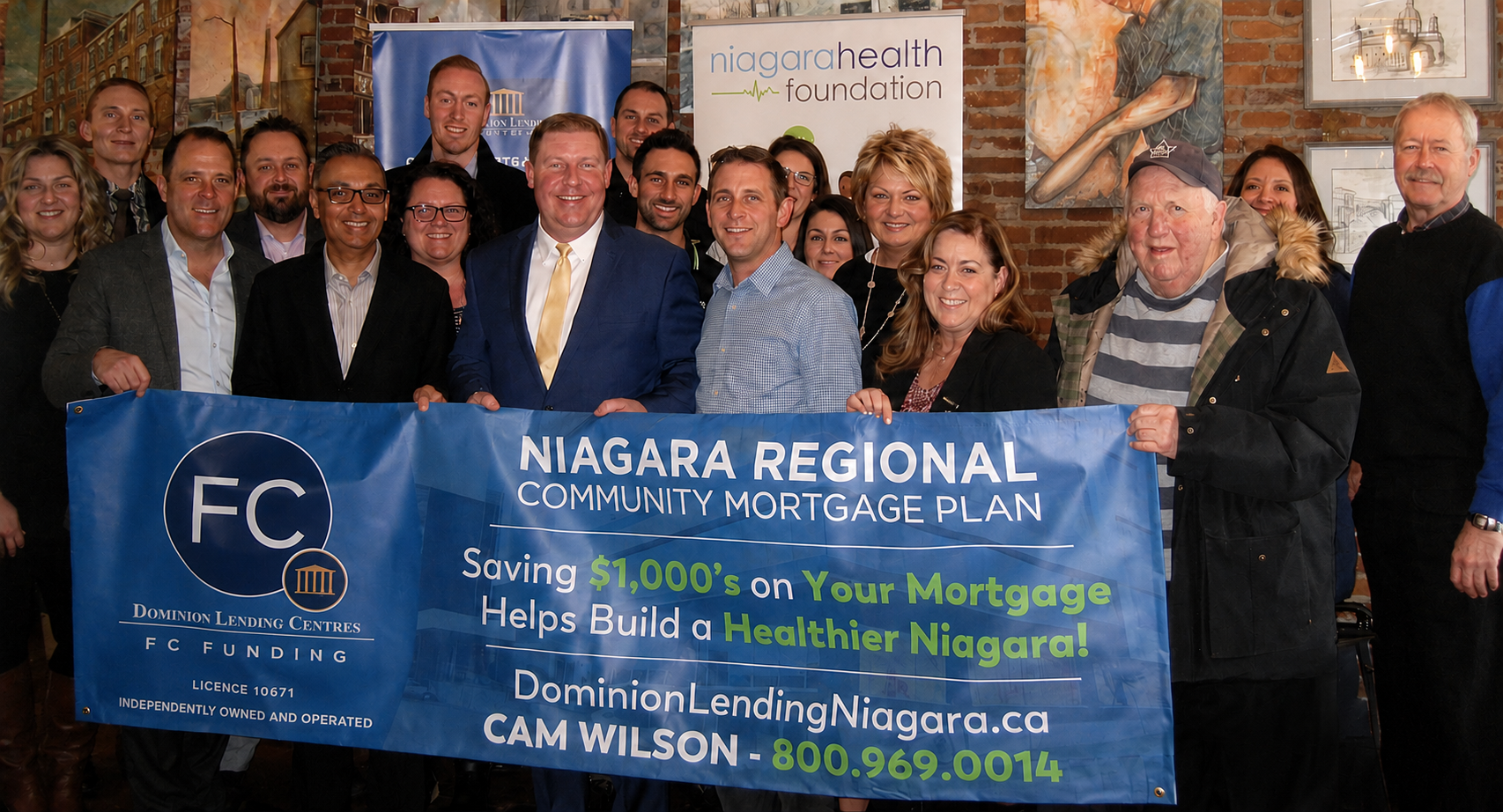
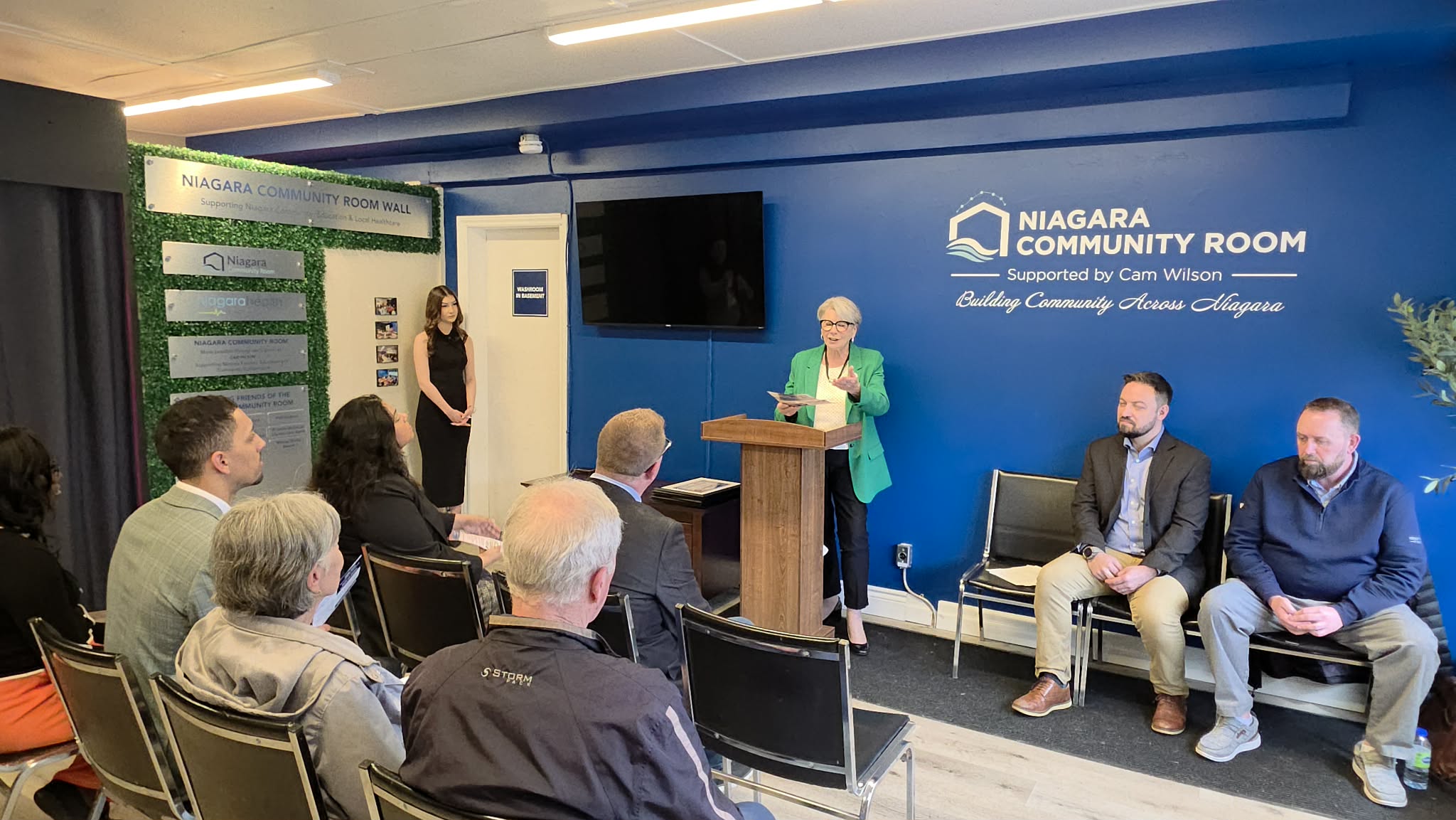
Beyond mortgage financing, our team supports local charitable initiatives, financial literacy programs, community partnerships, and projects the help strengthen Niagara.

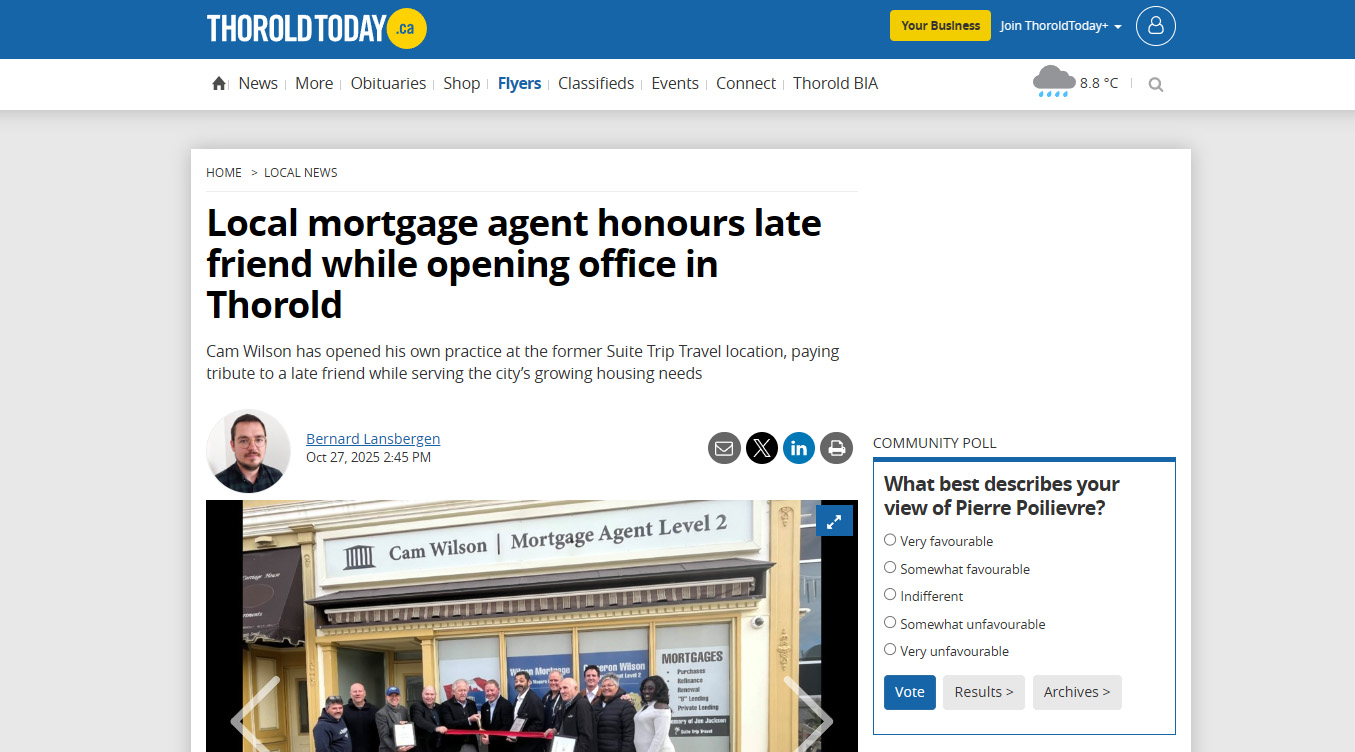
Letter from Regional Councillor Mike Britton Supporting Cam Wilson

How Can We Help?


Where do I begin to express my gratitude for Cam. We weren’t sure if we would even get approved for a mortgage. Cam met with us in person went over all our info. He got us approved for a mortgage and even got us an incredible interest rate. We got to house hunting right away and found our dream home. We now get to renovate and build a brand new fence and call this house a home. Thank you Cam for all your help. I’m a homeowner thanks to you!!!

Meaghan Mulcair
Mortgage Services and Options
Mortgage Services
Renewing Your Mortgage?
Don’t Sign Until You Review Your Options.
Most homeowners simply sign their bank’s renewal offer.
That may be convenient, but it isn’t always the best solution.
The Wilson Mortgage Team reviews mortgage renewals every day and helps clients explore:
Lower payment options
Debt consolidation opportunities
Improved cash flow
Better mortgage structures
Alternative lending solutions when needed
A 15-minute conversation could save thousands.
Serving Southern Ontario
With offices, meeting locations, virtual appointments, and mobile service options, the Wilson Mortgage Team helps clients throughout Niagara and across Southern Ontario.
Whether you prefer an in-person meeting or a virtual consultation, we’re available when and where you need us.
St. Catharines | Thorold | Niagara Falls | Welland | Port Colborne | Fort Erie | Pelham | Grimsby | West Lincoln | Niagara-on-the-Lake | Lincoln | Wainfleet | Dunnville | Burlington | Hamilton | Ancaster | Brantford | Woodstock | London | Mississauga | Oakville | Toronto | Barrie | Orillia | Newmarket | Simcoe

Over 90 Banks, Credit Unions & Lending Partners
No single lender is right for every borrower.
Our role is to compare solutions from a wide range of lending institutions to help identify the mortgage that best aligns with your goals.
More options.
More flexibility.
Better outcomes.


Lowest IRD Mortgage Penalties in Canada
Breaking your mortgage before the end of its term can cost thousands in penalties. Many Canadians face this situation when life changes unexpectedly — moving and renting, refinancing, divorce, job loss, illness, taking advantage of lower rates, pursuing an investment opportunity, or other urgent needs.
Research shows that approximately 60% of Canadian homeowners break their mortgage before the maturity date. For fixed-rate mortgages, this typically triggers a prepayment charge known as an Interest Rate Differential (IRD) penalty — often the largest and most costly type of mortgage penalty. Our research indicates that homeowners in the Niagara Region alone incur an estimated $150 million per year in IRD penalties, largely due to a lack of awareness about how these charges are calculated and how they can be minimized. Our role is to help you choose the right mortgage product from the start — one that provides flexibility, reduces the risk of costly penalties, and keeps more of your money where it belongs: in your pocket.
With our specialized expertise and broad access to lenders across the market, you can count on objective, impartial advice focused on maximizing your financial benefit as a mortgage consumer.
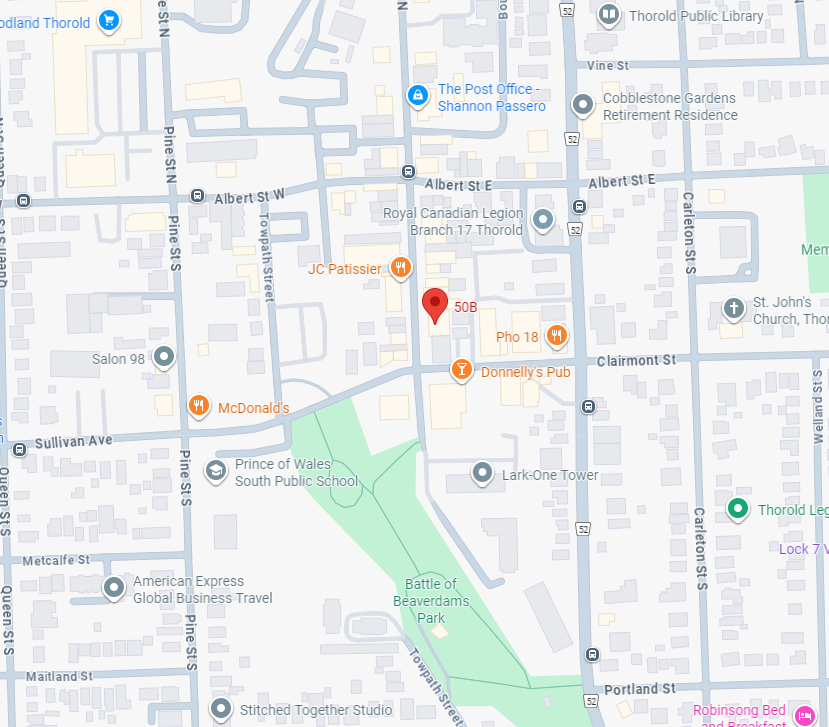
Where We’re Located & How To Reach Us
In-person appointments, virtual consultations, and mobile service through Niagara and Southern Ontario.

Book Your Mortgage Strategy Call
Every mortgage situation is different.
Tell us a little about your goals and a member of the Wilson Mortgage Team will reach out to discuss your options.